

Diriyah Gate: What’s Built, What’s Coming, and What It Means for Suppliers


Introduction
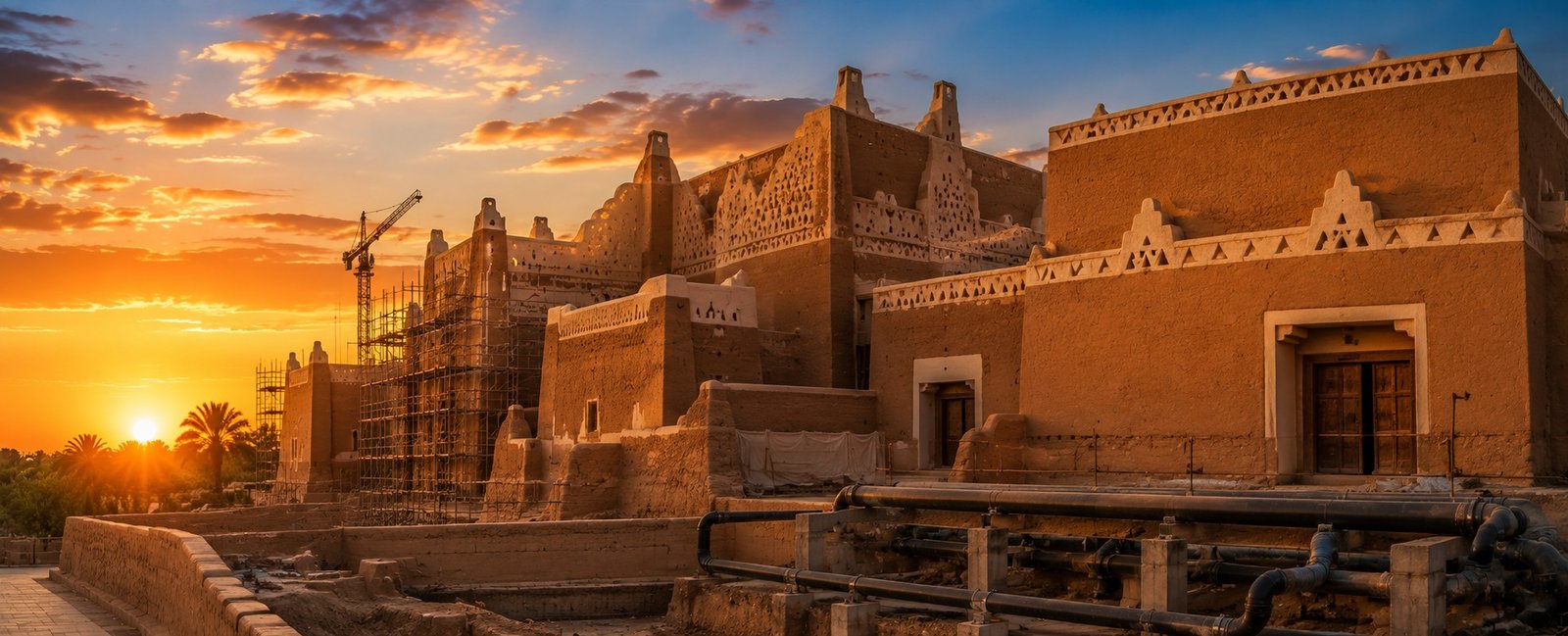
Diriyah Gate doesn’t get talked about the same way the Red Sea Project or NEOM do. There’s no futuristic skyline render, no private island. Instead, it’s Saudi Arabia’s birthplace, the historic seat of the first Saudi state, being rebuilt into what its developers call the world’s largest cultural destination. That framing matters, because it changes what actually gets built here, and what the supply chain behind it looks like.
This piece breaks down where Diriyah Gate actually stands today, what’s still coming over the next several years, and what all of it means for manufacturers, distributors, and suppliers positioning themselves for work on one of the Kingdom’s most advanced giga-projects.
Diriyah Gate at a Glance
Diriyah Gate is developed by Diriyah Company, formed in 2022 by the Diriyah Gate Development Authority (DGDA) and Saudi Arabia’s Public Investment Fund. The project centers on At-Turaif, a UNESCO World Heritage site and the historic home of the House of Saud, and is structured around two primary masterplans: the 14 square kilometre Diriyah Gate development surrounding At-Turaif, and Wadi Safar, a separate development roughly 11 kilometres south, envisioned as one of the world’s largest luxury gated residential communities, built around golf courses and equestrian facilities.
The stated ambition is for Diriyah to become the world’s largest cultural destination, combining historic preservation with new museums, an opera house, luxury hospitality, and residential development, all built to reflect traditional Najdi architectural style.
What’s Already Built and Open
Why it matters: Unlike some giga-projects still largely in planning, Diriyah Gate has real, functioning assets today, which matters for suppliers trying to gauge how mature this pipeline actually is.
- At-Turaif’s historic restoration and the surrounding heritage district opened to the public in 2022, alongside early cultural and dining venues.
- Several hotel and hospitality assets are already operating, with 14 international hotel operators confirmed for the project’s first phase, including Ritz-Carlton, Rosewood, Park Hyatt, Raffles, and Four Seasons, among others.
- Diriyah Square’s underground parking facility, a 10,500-space structure, was reported over halfway complete as of mid-2025, an early sign of how much infrastructure sits beneath the visible cultural district.
What’s Under Construction Right Now
Why it matters: This is where the bulk of current supplier and contractor activity sits, and where the scale of the project becomes clearest.
As of early 2026, Diriyah Company reported construction contracts exceeding SAR 120 billion, roughly $32 billion, awarded across the scheme, with the bulk of the superstructure and building envelope programme now under contract. Major contractors involved across different packages include El-Seif Engineering and Contracting, China State Construction Engineering Corporation, Shapoorji Pallonji, Al Ayuni Investment and Contracting, Albawani, and Binyah, a Saudi Real Estate Company subsidiary specializing in water, wastewater, and infrastructure works.
Key assets currently under development include:
- The Royal Diriyah Opera House and Diriyah Arena, major cultural and entertainment venues.
- Diriyah Square, the project’s planned commercial and dining heart.
- A Grand Mosque on the Grand Avenue frontage, designed to accommodate over 11,000 worshippers across indoor and outdoor prayer areas.
- Wadi Safar’s luxury residential development, including large scale infrastructure works and multi-billion dollar contracts covering villa construction and estate infrastructure.
- A Riyadh Metro Red Line extension, an 8.4 kilometre addition with five new stations connecting King Saud University to Diriyah, awarded in January 2026.
Residential handovers at Diriyah are set to begin in October 2026, putting several communities into their final fit-out and commissioning stages now.
What’s Still Coming
Why it matters: Diriyah’s overall completion timeline has shifted from an original 2027 target to 2030, reflecting the scale of infrastructure work still underway and broader macroeconomic factors affecting giga-project delivery across the Kingdom. For suppliers, this isn’t a warning sign, it’s a signal that the procurement pipeline here still has years of runway left, rather than winding down.
Expect continued phased hotel openings, ongoing infrastructure and utilities work across both Diriyah Gate and Wadi Safar, and major cultural venues like the opera house and arena progressing toward completion over the next several years.
Why This Matters for Suppliers
Why it matters: Diriyah’s material requirements differ in meaningful ways from a coastal development like the Red Sea Project or AMAALA. This is an inland, desert climate build centered on heritage-sensitive urban design, luxury residential estates, and high-end hospitality, not marine or offshore conditions. That shifts what “giga-project ready” actually means for a supplier trying to compete for this work.
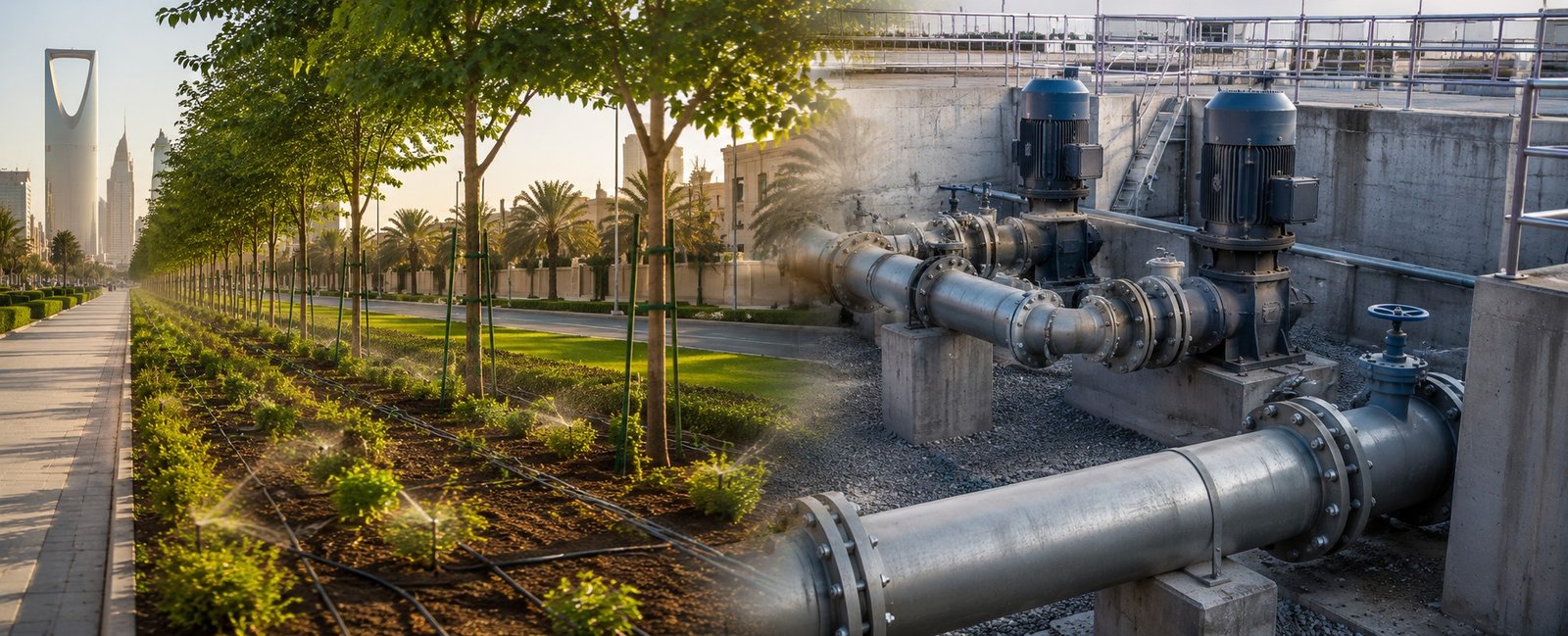
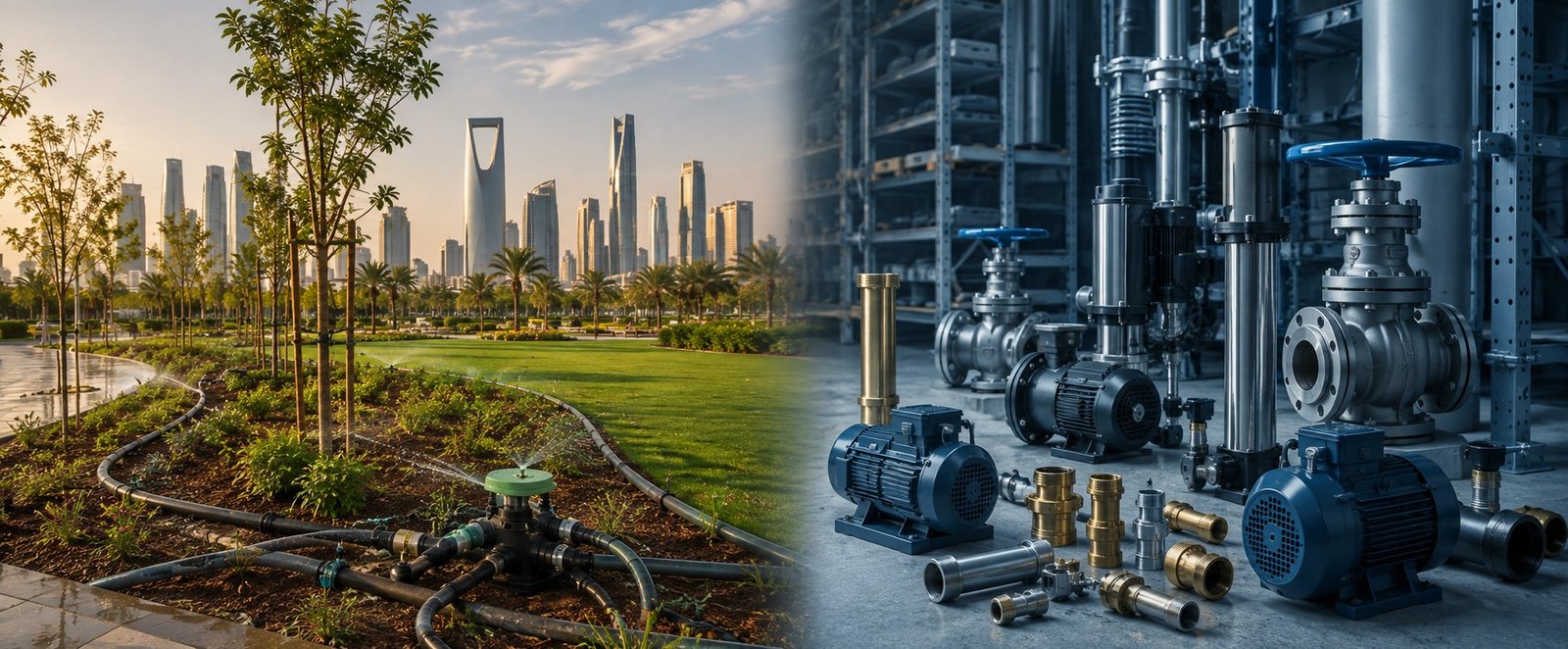
- Large scale water and wastewater infrastructure. With a dedicated contractor like Binyah focused specifically on water, wastewater, and utility works, and Wadi Safar’s golf-course-anchored residential community requiring extensive irrigation, pump and water system demand here is substantial and ongoing.
- Heat and dust resistant materials. As an inland desert site rather than a coastal one, corrosion resistance matters less than heat tolerance, durability under direct sun exposure, and resistance to dust infiltration in fittings and fixtures.
- Luxury hospitality-grade plumbing and fixtures. With 14-plus international hotel brands involved, material and finish expectations sit well above standard commercial construction.
- Consistent bulk supply across a multi-year timeline. With completion now targeted for 2030, this isn’t a short-term supply opportunity, it’s a sustained pipeline that rewards suppliers who can commit to long term reliability over one-off bulk orders.
What Makes a Supplier “Giga-Project Ready”
Why it matters: As covered in more depth in our piece on what the Red Sea Project and AMAALA mean for suppliers, a handful of factors consistently separate suppliers who land repeat giga-project work from those who don’t, and they apply just as directly to Diriyah.
- In-house manufacturing, not just reselling. Contractors on multi-year, tightly governed projects need suppliers who control their own production and quality, not ones dependent on a third party factory.
- Certified quality standards. ISO certification and documented quality control are baseline expectations at this scale.
- A genuinely broad product range. Consolidating pumps, valves, faucets, and building accessories under fewer, more capable suppliers reduces coordination overhead for contractors managing complex, multi-discipline packages.
- Local stock and nationwide delivery. With Diriyah based in Riyadh, a supplier with strong Riyadh-area distribution, backed by a wider national network, is well positioned to support ongoing project phases without material gaps.
- A track record with established contractors. Existing relationships with firms already active on major developments carry real weight in procurement decisions.
The Local Content Factor
Why it matters: As with other Vision 2030-aligned giga-projects, Diriyah sits inside the Kingdom’s growing local content push, overseen by the Local Content and Government Procurement Authority. This steadily shifts competitive advantage away from suppliers relying on imported goods and toward manufacturers who can produce, stock, and deliver locally, with documented quality standards to match.
For suppliers evaluating whether to expand local manufacturing capacity rather than continuing to import and resell, projects with a multi-year runway like Diriyah make that investment case even stronger, since the payoff isn’t limited to a single contract cycle.
Practical Takeaways for Suppliers
- Track the infrastructure and utilities contractors, not just the headline names. Companies like Binyah, focused specifically on water and wastewater works, often represent more direct opportunities for pump, valve, and plumbing suppliers than the main superstructure contractors do.
- Position for the multi-year timeline, not a single order. With completion targeted for 2030, suppliers who build durable relationships now are better placed for repeat business as later phases move from infrastructure into fit-out.
- Prioritize heat and dust resistance over marine corrosion resistance. Product positioning that worked for a coastal project won’t automatically translate to Diriyah’s inland desert conditions.
- Watch Wadi Safar specifically for pump and irrigation demand. A large scale golf and equestrian focused residential community carries significant landscaping and water system requirements beyond standard residential plumbing.
- Get certification and documentation in order now. Giga-project procurement teams expect this as a baseline, not a differentiator, regardless of which development you’re targeting.
Conclusion
Diriyah Gate is one of the more advanced giga-projects in Saudi Arabia’s current pipeline, with real assets already open, over $32 billion in contracts awarded, and a runway that now extends to 2030. For manufacturers and suppliers, that combination, proven momentum plus years of remaining work, makes it one of the more dependable long-term opportunities in the market, provided a business can meet the certification, consistency, and local manufacturing standards that projects at this scale now expect.
Your next steps:
- Identify the infrastructure and utilities contractors active on Diriyah’s water, wastewater, and irrigation packages.
- Review certification and documentation readiness against giga-project procurement standards.
- Assess product positioning for inland desert conditions rather than coastal or marine environments.
- Explore Kanzotech’s water pumps, faucets, and building accessories ranges to see how an in-house manufactured, ISO certified product line fits into long-term giga-project supply.
Looking to source materials for a large-scale development, or explore a supply partnership tied to Diriyah or another giga-project? Contact Kanzotech to discuss your project’s requirements.











Comments
No comments yet. Be the first to comment!