How to Budget for Rising Construction Costs in Saudi Arabia: A Contractor’s Guide

POSTED BY: HYZAM KENZ / August 21, 2026
Views
40 Views
0 Comments

Introduction

A budget built on last year’s material prices doesn’t survive contact with this year’s supplier quotes. That’s not a new problem in construction anywhere, but in Saudi Arabia right now, the gap between what a project was budgeted for and what it actually costs to deliver has widened enough that the old approach, add a standard contingency and move on, isn’t holding up the way it used to.

This guide walks through what’s actually driving costs up, the real numbers behind it, and a practical framework for building a construction budget in Saudi Arabia that can absorb volatility rather than getting blown apart by it.

Why Last Year’s Budgeting Assumptions No Longer Hold

Why it matters: Saudi Arabia’s construction sector is being pulled in two directions at once, sustained demand from an enormous giga-project pipeline pushing up prices for steel, cement, and skilled labor, alongside energy and input cost pressures affecting material production directly. A contractor budgeting the way they did two or three years ago is working from assumptions that no longer reflect current market conditions.

According to Saudi Arabia’s General Authority for Statistics, the national Construction Cost Index rose 1.4 percent year-on-year as of February 2026. That headline figure understates the picture in specific categories, where price movement has been considerably sharper.

The Real Numbers Behind Rising Costs

Why it matters: Vague awareness that “costs are up” isn’t useful for budgeting. Specific figures are.

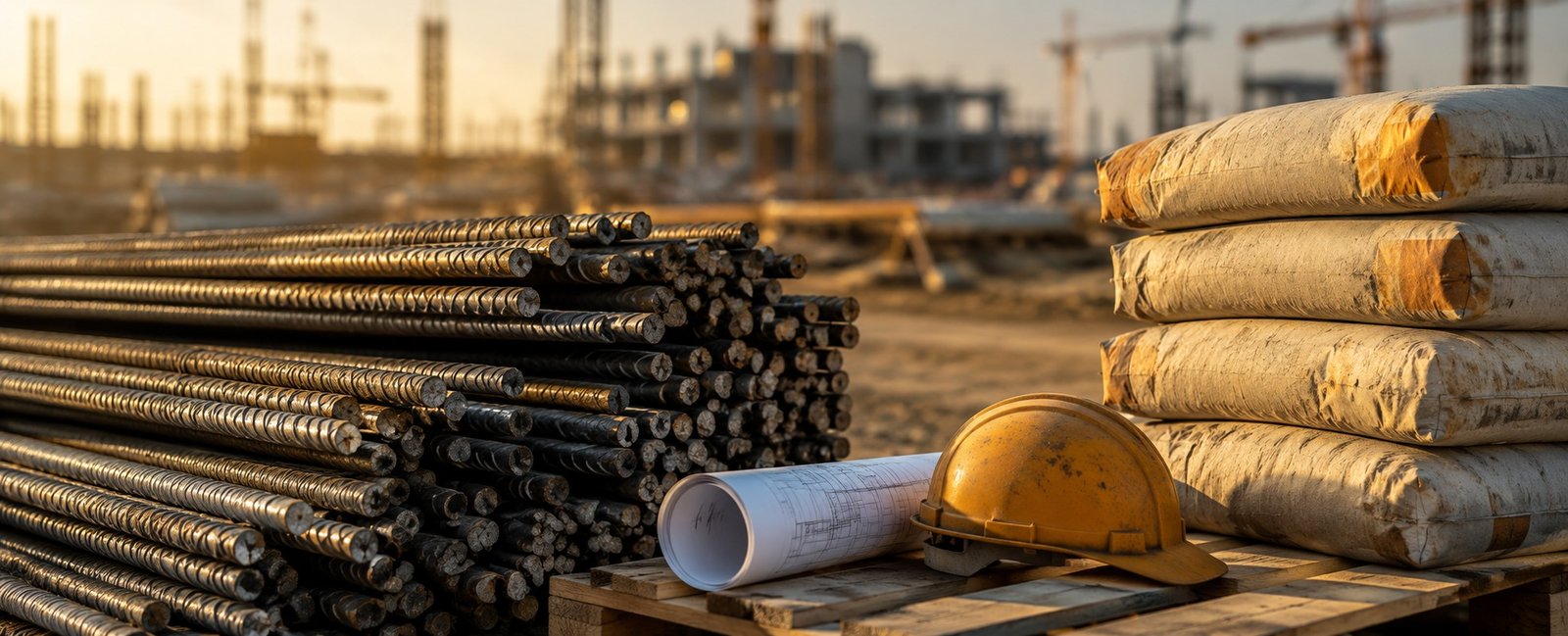
  • Cement has stayed relatively range-bound in absolute terms, with local black cement priced around SAR 15.7 to 15.8 per 50kg bag through mid-2026, but well above its long-run historical average of roughly SAR 12.2, and industry commentary points to a roughly 35 percent spike in diesel and heavy fuel oil costs in 2026 specifically pressuring cement producers toward further retail price increases.
  • Concrete has tracked near record levels, with resistant 350K grade concrete priced at approximately SAR 228 per cubic metre in early 2026, close to the all-time high of roughly SAR 231 recorded in May 2025.
  • Rebar steel has been reported in the range of roughly SAR 2,800 to 3,200 per ton in early 2026 market commentary, with global steel and cement prices more broadly cited as rising 5 to 10 percent within a single year.
  • Labor costs have climbed alongside Saudization requirements, with general construction wages commonly cited in the range of SAR 2,000 to 3,500 per month, and skilled trades like electricians and plumbers ranging from SAR 3,000 to 5,000, occasionally reaching SAR 8,000 with allowances on major projects.
  • Broader business input costs have been under sustained pressure too. Survey data from Saudi Arabia’s non-oil private sector PMI reported intensifying input cost inflation through early 2026, driven specifically by higher prices for metals, materials, fuel, and technology, alongside a survey-record increase in wages reported by mid-year.

What’s Actually Driving the Increases

Why it matters: Understanding the underlying causes, not just the numbers, helps you judge which cost pressures are likely temporary versus structural, and budget accordingly.

  • Giga-project demand is absorbing enormous material volume. NEOM, the Red Sea Project, Roshn, Qiddiya, and other major developments are consuming steel, cement, and labor at a scale that pushes local prices upward across the entire market, not just within those projects themselves.
  • Energy costs are feeding directly into material production. The reported spike in diesel and heavy fuel oil costs in 2026 raises the cost of producing cement specifically, a direct, traceable link between energy policy and material pricing.
  • Saudization continues to tighten the skilled labor market. As local labor requirements increase, wage pressure for both general and skilled trades has followed, a structural rather than temporary cost driver.
  • Imported materials carry additional exchange rate and freight exposure. Finishing materials and specialized components sourced internationally are subject to currency fluctuation and shipping cost volatility in a way that locally manufactured materials generally aren’t.

Building a Realistic Contingency Into Your Budget

Why it matters: A contingency line that made sense a few years ago may no longer reflect current volatility, particularly for cost categories seeing the sharpest movement.

Practical guidance:

  • A contingency in the range of 15 percent is commonly cited as a baseline for current Saudi market conditions, rather than the lower margins that were reasonable in more stable pricing environments.
  • Weight your contingency by category. Materials seeing the most volatility, cement production costs tied to energy prices, and steel tracking global commodity swings, deserve a larger buffer than more stable categories.
  • Don’t finalize a project budget until full funding is confirmed and available, since a gap between budget approval and project start gives prices more time to move before you’ve locked anything in.

Locking In Costs Where You Can

Why it matters: Contingency absorbs volatility you can’t avoid. Locking in pricing reduces how much volatility you’re exposed to in the first place.

  • Negotiate escalation clauses explicitly, rather than assuming standard contract terms cover material price movement adequately, particularly for longer-duration projects where price exposure compounds over time.
  • Buy in bulk with staggered delivery, securing pricing on steel, cement, and blocks in a single order even when the project doesn’t need all of it immediately, locking in current rates against future price increases.
  • Time major material purchases seasonally where possible. Market commentary points to winter months, when construction demand eases, as typically offering better pricing than the early summer period when demand and prices both climb.
  • Get multiple bids, and use an independent consulting engineer to evaluate them, rather than defaulting to the first or most familiar contractor quote, particularly given how much quoted pricing can now vary between suppliers on the same material category.

Local vs. Imported Materials: A Cost and Risk Trade-off

Why it matters: The choice between locally manufactured and imported materials isn’t just about upfront price, it’s about which risks you’re exposed to over the life of the project.

Imported finishing materials and specialized components carry exchange rate exposure and freight cost volatility on top of the base material price, both of which have moved unpredictably through 2026. Locally manufactured materials generally offer more stable pricing, faster lead times, and better alignment with Saudi Arabia’s growing local content requirements, a factor we’ve covered in more detail in our pieces on what the Red Sea Project and AMAALA mean for suppliers and what Diriyah Gate means for suppliers, where this same local-versus-imported dynamic plays directly into project cost and delivery risk.

Practical tip: For budget-sensitive categories specifically, plumbing fittings, valves, door hardware, and similar building accessories, sourcing from an in-house manufacturer with local production capacity generally offers more predictable pricing than a comparable imported alternative subject to freight and currency swings.

Labor Cost Planning Under Saudization

Why it matters: Labor cost increases tied to Saudization requirements are structural, not cyclical, meaning they should be budgeted as an ongoing line item that continues climbing, not a one-time adjustment.

Practical guidance:

  • Budget skilled trade labor toward the higher end of current market ranges, particularly for major projects where demand for electricians, plumbers, and similar trades is competing directly with giga-project hiring.
  • Factor in allowances and incentives realistically for major projects, since reported wage figures with allowances included run meaningfully higher than base wage ranges alone.
  • Revisit labor cost assumptions at each project milestone rather than only at the initial budgeting stage, given how quickly this specific cost category has been moving.

Supplier Consolidation as a Cost Control Strategy

Why it matters: Beyond individual price negotiation, how many suppliers you’re coordinating across a project has a real, if less obvious, cost impact.

As covered in our building accessories checklist for new construction projects and our guide on how to choose a valve manufacturer in Saudi Arabia, consolidating plumbing materials, door hardware, and building accessories under fewer, more capable manufacturers reduces coordination overhead and generally strengthens bulk pricing leverage compared to managing many smaller suppliers across a project. In a rising-cost environment specifically, this consolidation effect matters more than it did when pricing was more stable, since every additional supplier relationship is another point of price and delivery uncertainty layered onto the budget.

Practical Budgeting Checklist

  1. Confirm current material pricing directly with suppliers before finalizing a budget, rather than relying on figures from even a few months earlier.
  2. Set contingency at a category-weighted rate, higher for volatile materials like cement and steel, standard for more stable categories.
  3. Negotiate explicit escalation clauses for longer-duration projects.
  4. Secure bulk pricing with staggered delivery on major material categories where project timing allows.
  5. Evaluate local versus imported sourcing for each material category, weighing price stability and lead time against unit cost alone.
  6. Budget skilled labor toward the higher end of current wage ranges, with allowances factored in for major projects.
  7. Consolidate supplier relationships where practical to reduce coordination overhead and strengthen bulk pricing leverage.
  8. Revisit budget assumptions at each major project milestone, not just at the outset.

Common Mistakes When Budgeting in a Rising-Cost Market

  • Using last year’s material prices as a baseline, without confirming current figures directly with suppliers before finalizing a budget.
  • Applying a flat contingency percentage across every cost category, rather than weighting it toward the materials actually seeing the sharpest price movement.
  • Finalizing a budget before funding is secured, leaving a gap where prices can move before the project even begins.
  • Treating labor cost increases as temporary, when Saudization-driven wage pressure is a structural, ongoing trend rather than a short-term spike.
  • Defaulting to imported materials without weighing exchange rate and freight exposure, particularly for categories where a comparable local manufacturer exists.

Frequently Asked Questions

  1. How much has construction cost inflation actually risen in Saudi Arabia in 2026? Saudi Arabia’s national Construction Cost Index rose 1.4 percent year-on-year as of February 2026, though specific categories like cement production costs and skilled labor have seen sharper increases than that headline figure suggests.
  2. What’s driving cement and concrete price pressure specifically? A reported spike in diesel and heavy fuel oil costs in 2026 has directly raised cement production costs, while concrete pricing has tracked near record highs alongside sustained demand from the Kingdom’s giga-project pipeline.
  3. How much contingency should I build into a construction budget in Saudi Arabia right now? A contingency around 15 percent is commonly cited as a reasonable baseline under current market conditions, weighted higher for volatile categories like steel and cement-dependent materials.
  4. Are local materials really more cost-stable than imported ones? Generally yes. Imported materials carry additional exchange rate and freight cost exposure on top of the base price, while locally manufactured materials tend to offer more predictable pricing and faster lead times.
  5. How should I budget for labor costs under Saudization requirements? Budget toward the higher end of current wage ranges for both general and skilled trades, and treat labor cost increases as an ongoing structural trend rather than a temporary adjustment, since Saudization-driven wage pressure isn’t expected to reverse.
  6. Does consolidating suppliers actually save money in a rising-cost market? It can, both through stronger bulk pricing leverage with fewer, larger orders, and by reducing the coordination overhead and price uncertainty that comes with managing many smaller supplier relationships across a project.
  7. Is it worth locking in material prices with a bulk order even before I need the full quantity? Often yes, particularly for categories seeing sustained price increases. Securing pricing now with staggered delivery can offset future increases, provided project timing and storage allow for it.
  8. When is the best time to purchase major construction materials in Saudi Arabia? Market commentary points to winter months, when construction demand eases, as typically offering better pricing than the early summer period, when both demand and prices tend to climb.

Conclusion

Budgeting for construction in Saudi Arabia right now means planning for volatility as the default condition, not the exception. Cement and concrete pricing tracking near historical highs, steel and global material costs climbing 5 to 10 percent annually, and structural labor cost pressure from Saudization all point toward the same conclusion: a flat, standard contingency and last year’s pricing assumptions won’t hold up. A category-weighted contingency, locked-in pricing where possible, careful local-versus-imported sourcing decisions, and fewer, more capable supplier relationships give a budget the best chance of surviving the project it was built for.

Your next steps:

  1. Confirm current material pricing directly with suppliers before finalizing your next budget.
  2. Weight your contingency by category rather than applying a flat percentage across the board.
  3. Explore consolidating your building materials sourcing through Kanzotech’s plumbing materials, door hardware, water pumps, and faucets ranges to reduce supplier coordination overhead and strengthen bulk pricing.

Building a project budget in Saudi Arabia’s current cost environment? Contact Kanzotech to discuss bulk pricing and local manufacturing options for your project.

Comments

No comments yet. Be the first to comment!

Your comments are valuable

Blog Detail Image

How to Budget for Rising Construction Costs in Saudi Arabia: A Contractor’s Guide

POSTED BY: HYZAM KENZ / 21 August 2026
40 Views
0 Comments

Introduction

A budget built on last year’s material prices doesn’t survive contact with this year’s supplier quotes. That’s not a new problem in construction anywhere, but in Saudi Arabia right now, the gap between what a project was budgeted for and what it actually costs to deliver has widened enough that the old approach, add a standard contingency and move on, isn’t holding up the way it used to.

This guide walks through what’s actually driving costs up, the real numbers behind it, and a practical framework for building a construction budget in Saudi Arabia that can absorb volatility rather than getting blown apart by it.

Why Last Year’s Budgeting Assumptions No Longer Hold

Why it matters: Saudi Arabia’s construction sector is being pulled in two directions at once, sustained demand from an enormous giga-project pipeline pushing up prices for steel, cement, and skilled labor, alongside energy and input cost pressures affecting material production directly. A contractor budgeting the way they did two or three years ago is working from assumptions that no longer reflect current market conditions.

According to Saudi Arabia’s General Authority for Statistics, the national Construction Cost Index rose 1.4 percent year-on-year as of February 2026. That headline figure understates the picture in specific categories, where price movement has been considerably sharper.

The Real Numbers Behind Rising Costs

Why it matters: Vague awareness that “costs are up” isn’t useful for budgeting. Specific figures are.

  • Cement has stayed relatively range-bound in absolute terms, with local black cement priced around SAR 15.7 to 15.8 per 50kg bag through mid-2026, but well above its long-run historical average of roughly SAR 12.2, and industry commentary points to a roughly 35 percent spike in diesel and heavy fuel oil costs in 2026 specifically pressuring cement producers toward further retail price increases.
  • Concrete has tracked near record levels, with resistant 350K grade concrete priced at approximately SAR 228 per cubic metre in early 2026, close to the all-time high of roughly SAR 231 recorded in May 2025.
  • Rebar steel has been reported in the range of roughly SAR 2,800 to 3,200 per ton in early 2026 market commentary, with global steel and cement prices more broadly cited as rising 5 to 10 percent within a single year.
  • Labor costs have climbed alongside Saudization requirements, with general construction wages commonly cited in the range of SAR 2,000 to 3,500 per month, and skilled trades like electricians and plumbers ranging from SAR 3,000 to 5,000, occasionally reaching SAR 8,000 with allowances on major projects.
  • Broader business input costs have been under sustained pressure too. Survey data from Saudi Arabia’s non-oil private sector PMI reported intensifying input cost inflation through early 2026, driven specifically by higher prices for metals, materials, fuel, and technology, alongside a survey-record increase in wages reported by mid-year.

What’s Actually Driving the Increases

Why it matters: Understanding the underlying causes, not just the numbers, helps you judge which cost pressures are likely temporary versus structural, and budget accordingly.

  • Giga-project demand is absorbing enormous material volume. NEOM, the Red Sea Project, Roshn, Qiddiya, and other major developments are consuming steel, cement, and labor at a scale that pushes local prices upward across the entire market, not just within those projects themselves.
  • Energy costs are feeding directly into material production. The reported spike in diesel and heavy fuel oil costs in 2026 raises the cost of producing cement specifically, a direct, traceable link between energy policy and material pricing.
  • Saudization continues to tighten the skilled labor market. As local labor requirements increase, wage pressure for both general and skilled trades has followed, a structural rather than temporary cost driver.
  • Imported materials carry additional exchange rate and freight exposure. Finishing materials and specialized components sourced internationally are subject to currency fluctuation and shipping cost volatility in a way that locally manufactured materials generally aren’t.

Building a Realistic Contingency Into Your Budget

Why it matters: A contingency line that made sense a few years ago may no longer reflect current volatility, particularly for cost categories seeing the sharpest movement.

Practical guidance:

  • A contingency in the range of 15 percent is commonly cited as a baseline for current Saudi market conditions, rather than the lower margins that were reasonable in more stable pricing environments.
  • Weight your contingency by category. Materials seeing the most volatility, cement production costs tied to energy prices, and steel tracking global commodity swings, deserve a larger buffer than more stable categories.
  • Don’t finalize a project budget until full funding is confirmed and available, since a gap between budget approval and project start gives prices more time to move before you’ve locked anything in.

Locking In Costs Where You Can

Why it matters: Contingency absorbs volatility you can’t avoid. Locking in pricing reduces how much volatility you’re exposed to in the first place.

  • Negotiate escalation clauses explicitly, rather than assuming standard contract terms cover material price movement adequately, particularly for longer-duration projects where price exposure compounds over time.
  • Buy in bulk with staggered delivery, securing pricing on steel, cement, and blocks in a single order even when the project doesn’t need all of it immediately, locking in current rates against future price increases.
  • Time major material purchases seasonally where possible. Market commentary points to winter months, when construction demand eases, as typically offering better pricing than the early summer period when demand and prices both climb.
  • Get multiple bids, and use an independent consulting engineer to evaluate them, rather than defaulting to the first or most familiar contractor quote, particularly given how much quoted pricing can now vary between suppliers on the same material category.

Local vs. Imported Materials: A Cost and Risk Trade-off

Why it matters: The choice between locally manufactured and imported materials isn’t just about upfront price, it’s about which risks you’re exposed to over the life of the project.

Imported finishing materials and specialized components carry exchange rate exposure and freight cost volatility on top of the base material price, both of which have moved unpredictably through 2026. Locally manufactured materials generally offer more stable pricing, faster lead times, and better alignment with Saudi Arabia’s growing local content requirements, a factor we’ve covered in more detail in our pieces on what the Red Sea Project and AMAALA mean for suppliers and what Diriyah Gate means for suppliers, where this same local-versus-imported dynamic plays directly into project cost and delivery risk.

Practical tip: For budget-sensitive categories specifically, plumbing fittings, valves, door hardware, and similar building accessories, sourcing from an in-house manufacturer with local production capacity generally offers more predictable pricing than a comparable imported alternative subject to freight and currency swings.

Labor Cost Planning Under Saudization

Why it matters: Labor cost increases tied to Saudization requirements are structural, not cyclical, meaning they should be budgeted as an ongoing line item that continues climbing, not a one-time adjustment.

Practical guidance:

  • Budget skilled trade labor toward the higher end of current market ranges, particularly for major projects where demand for electricians, plumbers, and similar trades is competing directly with giga-project hiring.
  • Factor in allowances and incentives realistically for major projects, since reported wage figures with allowances included run meaningfully higher than base wage ranges alone.
  • Revisit labor cost assumptions at each project milestone rather than only at the initial budgeting stage, given how quickly this specific cost category has been moving.

Supplier Consolidation as a Cost Control Strategy

Why it matters: Beyond individual price negotiation, how many suppliers you’re coordinating across a project has a real, if less obvious, cost impact.

As covered in our building accessories checklist for new construction projects and our guide on how to choose a valve manufacturer in Saudi Arabia, consolidating plumbing materials, door hardware, and building accessories under fewer, more capable manufacturers reduces coordination overhead and generally strengthens bulk pricing leverage compared to managing many smaller suppliers across a project. In a rising-cost environment specifically, this consolidation effect matters more than it did when pricing was more stable, since every additional supplier relationship is another point of price and delivery uncertainty layered onto the budget.

Practical Budgeting Checklist

  1. Confirm current material pricing directly with suppliers before finalizing a budget, rather than relying on figures from even a few months earlier.
  2. Set contingency at a category-weighted rate, higher for volatile materials like cement and steel, standard for more stable categories.
  3. Negotiate explicit escalation clauses for longer-duration projects.
  4. Secure bulk pricing with staggered delivery on major material categories where project timing allows.
  5. Evaluate local versus imported sourcing for each material category, weighing price stability and lead time against unit cost alone.
  6. Budget skilled labor toward the higher end of current wage ranges, with allowances factored in for major projects.
  7. Consolidate supplier relationships where practical to reduce coordination overhead and strengthen bulk pricing leverage.
  8. Revisit budget assumptions at each major project milestone, not just at the outset.

Common Mistakes When Budgeting in a Rising-Cost Market

  • Using last year’s material prices as a baseline, without confirming current figures directly with suppliers before finalizing a budget.
  • Applying a flat contingency percentage across every cost category, rather than weighting it toward the materials actually seeing the sharpest price movement.
  • Finalizing a budget before funding is secured, leaving a gap where prices can move before the project even begins.
  • Treating labor cost increases as temporary, when Saudization-driven wage pressure is a structural, ongoing trend rather than a short-term spike.
  • Defaulting to imported materials without weighing exchange rate and freight exposure, particularly for categories where a comparable local manufacturer exists.

Frequently Asked Questions

  1. How much has construction cost inflation actually risen in Saudi Arabia in 2026? Saudi Arabia’s national Construction Cost Index rose 1.4 percent year-on-year as of February 2026, though specific categories like cement production costs and skilled labor have seen sharper increases than that headline figure suggests.
  2. What’s driving cement and concrete price pressure specifically? A reported spike in diesel and heavy fuel oil costs in 2026 has directly raised cement production costs, while concrete pricing has tracked near record highs alongside sustained demand from the Kingdom’s giga-project pipeline.
  3. How much contingency should I build into a construction budget in Saudi Arabia right now? A contingency around 15 percent is commonly cited as a reasonable baseline under current market conditions, weighted higher for volatile categories like steel and cement-dependent materials.
  4. Are local materials really more cost-stable than imported ones? Generally yes. Imported materials carry additional exchange rate and freight cost exposure on top of the base price, while locally manufactured materials tend to offer more predictable pricing and faster lead times.
  5. How should I budget for labor costs under Saudization requirements? Budget toward the higher end of current wage ranges for both general and skilled trades, and treat labor cost increases as an ongoing structural trend rather than a temporary adjustment, since Saudization-driven wage pressure isn’t expected to reverse.
  6. Does consolidating suppliers actually save money in a rising-cost market? It can, both through stronger bulk pricing leverage with fewer, larger orders, and by reducing the coordination overhead and price uncertainty that comes with managing many smaller supplier relationships across a project.
  7. Is it worth locking in material prices with a bulk order even before I need the full quantity? Often yes, particularly for categories seeing sustained price increases. Securing pricing now with staggered delivery can offset future increases, provided project timing and storage allow for it.
  8. When is the best time to purchase major construction materials in Saudi Arabia? Market commentary points to winter months, when construction demand eases, as typically offering better pricing than the early summer period, when both demand and prices tend to climb.

Conclusion

Budgeting for construction in Saudi Arabia right now means planning for volatility as the default condition, not the exception. Cement and concrete pricing tracking near historical highs, steel and global material costs climbing 5 to 10 percent annually, and structural labor cost pressure from Saudization all point toward the same conclusion: a flat, standard contingency and last year’s pricing assumptions won’t hold up. A category-weighted contingency, locked-in pricing where possible, careful local-versus-imported sourcing decisions, and fewer, more capable supplier relationships give a budget the best chance of surviving the project it was built for.

Your next steps:

  1. Confirm current material pricing directly with suppliers before finalizing your next budget.
  2. Weight your contingency by category rather than applying a flat percentage across the board.
  3. Explore consolidating your building materials sourcing through Kanzotech’s plumbing materials, door hardware, water pumps, and faucets ranges to reduce supplier coordination overhead and strengthen bulk pricing.

Building a project budget in Saudi Arabia’s current cost environment? Contact Kanzotech to discuss bulk pricing and local manufacturing options for your project.

Comments

No comments yet. Be the first to comment!

Footer Logo

Let Life Flow With Us!

OFFICE LOCATION

Al Kolibi Tower,
King Saud Street
P.B No: 32426, Dammam,
Saudi Arabia

CONTACT

sales@kanzotech com

info@kanzotech.com

+966 55 981 0470

+966 54 750 9351