Construction Optimism vs Giga-Project Setbacks: Making Sense of Saudi Arabia’s Mixed Signals in 2026

POSTED BY: HYZAM KENZ / August 21, 2026
Views
39 Views
0 Comments

Introduction

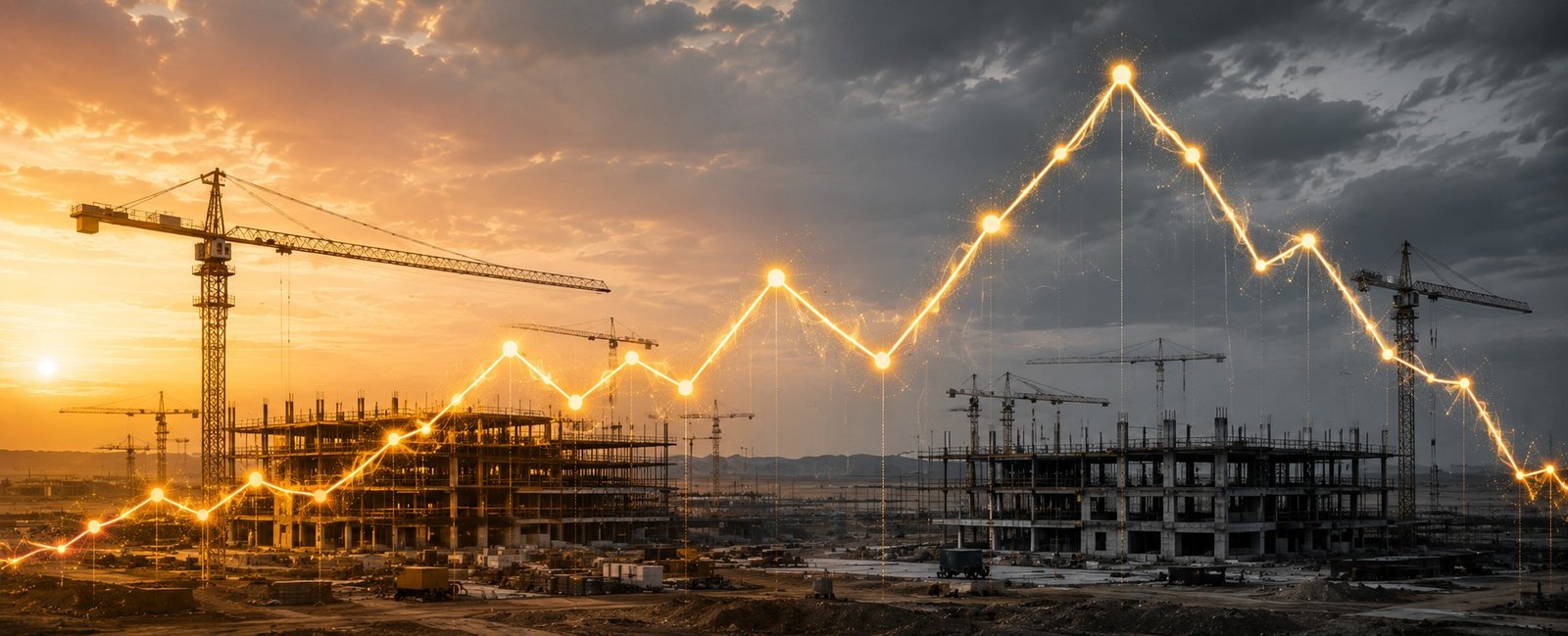
Two storylines have been running through Saudi Arabia’s construction and business press in 2026, and on the surface they don’t seem to fit together. One is a run of strong economic data, a non-oil private sector that hit an 11-year high in late 2025 and kept expanding into the new year. The other is a string of giga-project headlines, contract terminations at NEOM, an international sporting event reassigned away from Trojena, and public statements from Public Investment Fund leadership about scaling back spending.

Both storylines are true at the same time. This piece walks through what the economic data actually shows, what happened at the giga-project level over the same period, and how to make sense of the two without assuming one contradicts the other.

The Optimism Side: What the PMI Data Actually Shows

Why it matters: Riyad Bank’s Saudi Arabia Purchasing Managers’ Index, compiled by S&P Global and covering the non-oil private sector across manufacturing, services, construction, retail, and agriculture, has been one of the clearest signals of underlying business activity in the Kingdom through this period, and for most of late 2025 and early 2026, that signal was strongly positive.

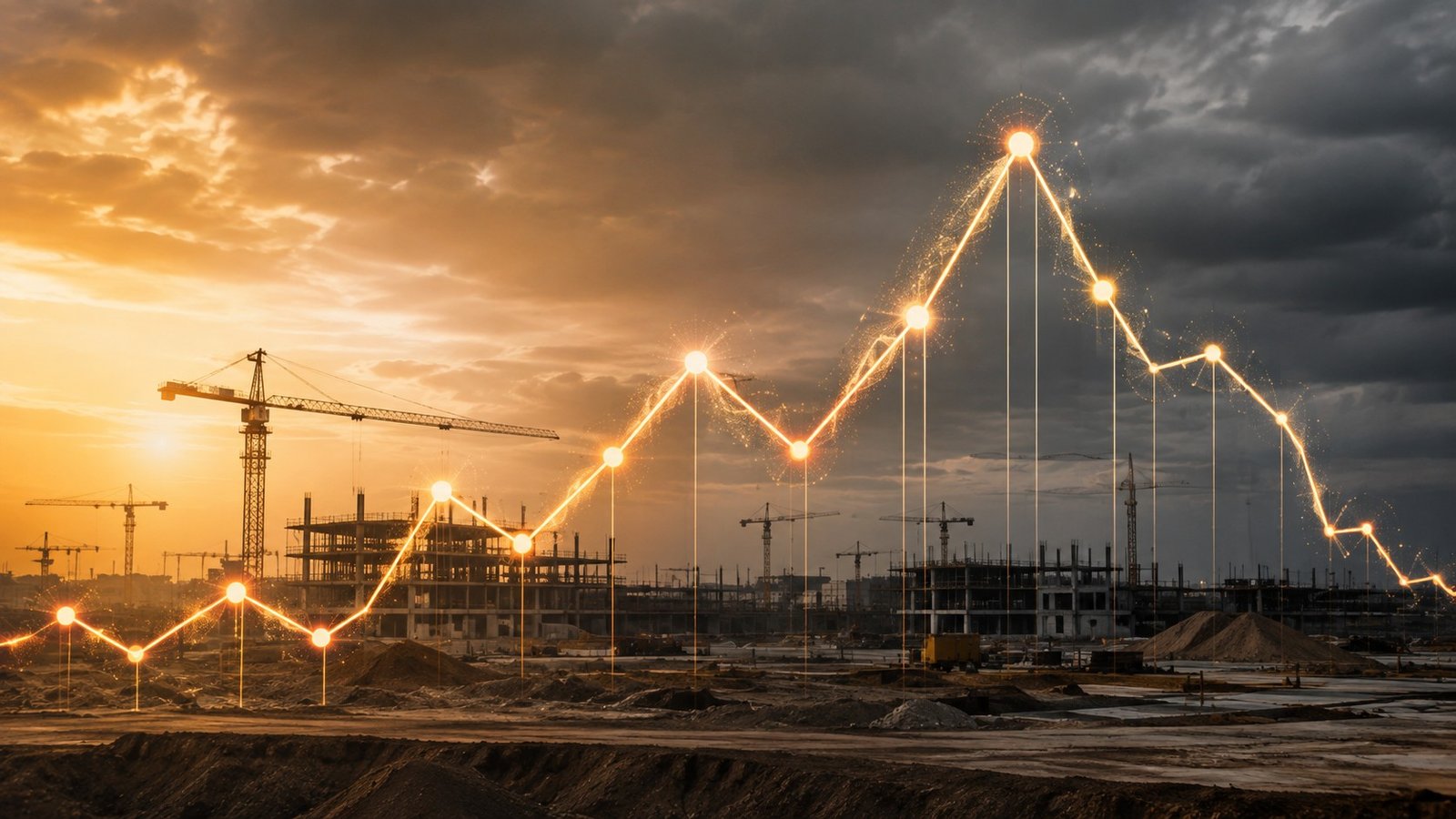
The index hit 60.2 in October 2025, an 11-year high, before settling into what was still a very strong 58.5 in November and 57.4 in December. Momentum cooled gradually into the new year, 56.3 in January and 56.1 in February, but remained firmly in expansion territory throughout. Behind those numbers sat real macroeconomic strength: Saudi Arabia’s General Authority for Statistics reported real GDP growth of 4.5 percent year-on-year for 2025, with non-oil activities specifically advancing 4.9 percent. Survey commentary through this period pointed to resilient domestic demand, steady project work, newly approved projects, and improving investor activity.

The Shock: March 2026’s Sudden Contraction

Why it matters: This is where the story shifts sharply, and it’s worth being precise about what actually happened rather than glossing over it.

In March 2026, the PMI plunged to 48.8, dropping below the 50-point threshold that separates expansion from contraction for the first time in nearly six years, and marking the steepest downturn since the record low recorded in March 2020. Survey commentary attributed the decline to disruptions tied to regional conflict in the Middle East, which strained supply chains and delayed client spending across the non-oil private sector. New orders stalled, export demand shrank at its fastest pace in six years, delivery times lengthened at their sharpest rate since June 2020, and business sentiment fell to its lowest reading since that same period.

The Recovery: April Through July 2026

Why it matters: The contraction didn’t persist. The index moved back into expansion territory the very next month, registering 51.5 in April, 52.8 in May, 53.3 in June, and 53.1 in July, marking four consecutive months of renewed growth. Business activity, domestic demand, and supply chain conditions all showed genuine improvement across this stretch, though growth settled at a more moderate pace than the highs seen in late 2025, with export sales continuing to decline through the summer amid elevated freight costs and competitive pressure.

Meanwhile, at the Giga-Project Level: NEOM’s Rescoping

Why it matters: Running alongside this broader economic story, a separate and more project-specific narrative was unfolding at NEOM, one we’ve covered in detail in our pieces on Trojena losing the 2029 Asian Winter Games and NEOM’s broader restructuring.

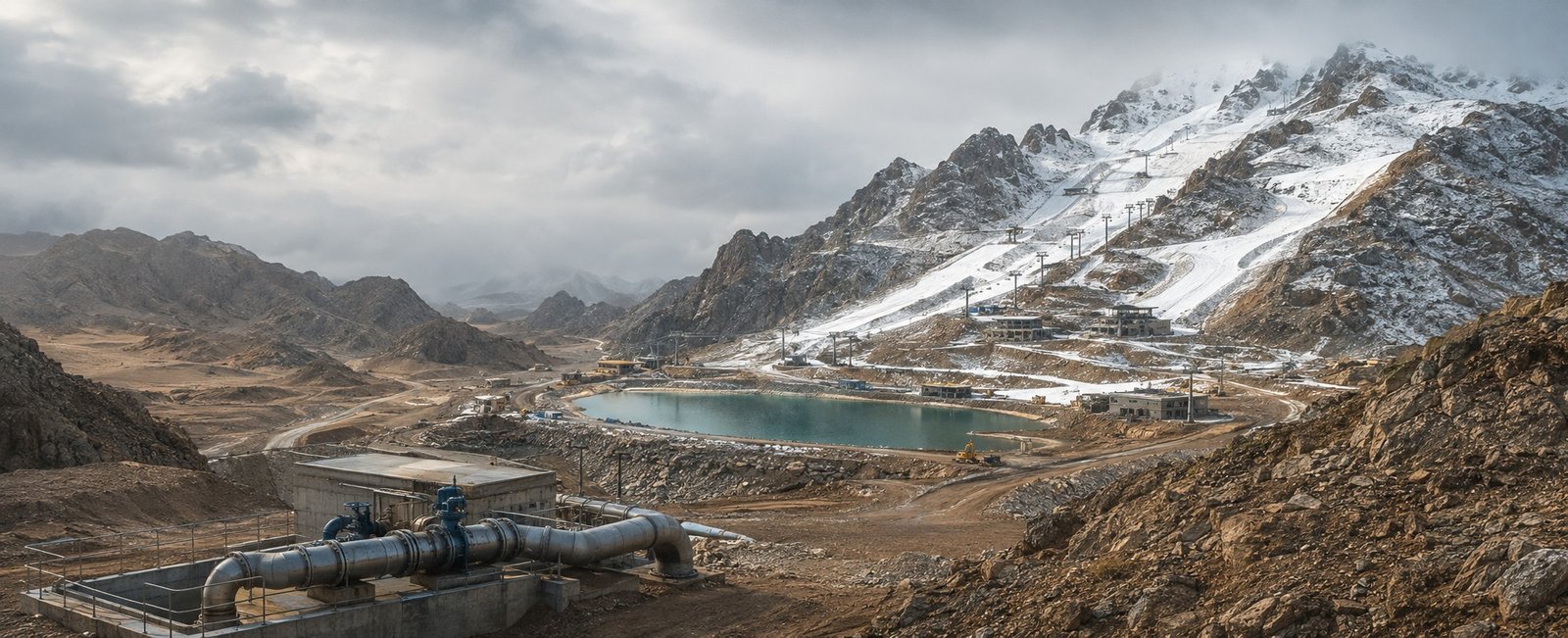
In January and February 2026, the Asian Winter Games were postponed and then formally reassigned from Trojena to Almaty, following reported construction delays tied specifically to Trojena’s desalination and water transport infrastructure. In the first quarter of 2026, NEOM terminated several construction contracts worth a combined total potentially exceeding $5 billion, including a roughly $4.7 billion dam and freshwater lake package awarded to WeBuild, terminated at approximately 30 percent completion. Around the same period, PIF leadership, including Investment Minister Khalid Al-Falih, publicly discussed the need to scale back giga-project spending and create more room for private capital.

Are These Two Stories Connected, or Just Coincidental Timing?

Why it matters: It’s tempting to read these two storylines as cause and effect, but the honest answer is more nuanced than that, and worth being careful about.

The NEOM-specific issues appear to trace back to project-level factors that predate the March 2026 PMI contraction. The Trojena infrastructure delays behind the Winter Games reassignment were already being reported through 2025, well before the regional disruptions cited in March’s PMI data. That suggests the NEOM rescoping reflects its own distinct set of delivery and capital allocation decisions, rather than being a direct consequence of the broader economic shock captured in that single month’s PMI reading.

At the same time, the two storylines likely share some common underlying pressure. PIF leadership’s public comments about giga-projects consuming significant government resources, and the need for greater fiscal discipline across the portfolio, reflect a broader capital allocation mindset that plausibly intersects with the same macroeconomic conditions, regional instability, elevated costs, cautious investor sentiment, showing up in the national PMI data. It would be an overstatement to say one caused the other, but treating them as entirely unrelated would likely miss a real, if indirect, connection.

What This Means for Contractors and Suppliers Reading the Signals

Why it matters: The practical lesson here isn’t about which storyline is “true,” it’s about recognizing that macro-level economic indicators and individual giga-project trajectories are genuinely different signals, and reading only one gives an incomplete picture.

  • A strong national PMI doesn’t guarantee any specific giga-project stays on schedule. NEOM’s rescoping happened during a period when the broader non-oil economy was still expanding, not contracting.
  • A specific project’s setbacks don’t necessarily reflect broader economic weakness. Trojena’s infrastructure bottleneck was a project-specific engineering and delivery problem, not a symptom of the wider economy.
  • Track both levels independently. Suppliers and contractors evaluating opportunities across Saudi Arabia’s construction sector benefit from watching sector-wide indicators like the PMI for general market conditions, while separately tracking the specific status of individual giga-projects, rather than assuming movement in one predicts movement in the other.
  • Volatility is now part of the picture. The swing from an 11-year PMI high in October 2025 to a near six-year low in March 2026, and back to solid expansion within a month, shows how quickly conditions can shift. Planning and risk assessment that assumes steady, linear conditions doesn’t reflect what 2026 has actually looked like so far.

Conclusion

Saudi Arabia’s 2026 construction and business landscape has genuinely contained both stories at once, a resilient, often strong non-oil private sector, and a real rescoping of some of the Kingdom’s highest-profile giga-project commitments. Neither story cancels the other out, and neither tells the full picture on its own. For anyone operating in this space, the more useful approach is tracking both signals independently, broad economic indicators for general market direction, and specific project status for where actual opportunity and risk currently sit.

Your next steps:

  1. Track Saudi Arabia’s monthly PMI releases for a broad read on non-oil private sector conditions, alongside project-specific news for individual giga-projects.
  2. Review our coverage of NEOM’s restructuring and Trojena’s infrastructure setback for the project-level detail behind this year’s headlines.
  3. Explore our broader coverage of Saudi Arabia’s giga-project pipeline, including AMAALA, Diriyah Gate, SPARK, and Soudah Peaks, for a fuller picture beyond any single project.

Trying to make sense of where the real opportunities and risks sit across Saudi Arabia’s construction sector in 2026? Contact Kanzotech to discuss your project’s requirements against the current market picture.

Comments

No comments yet. Be the first to comment!

Your comments are valuable

Blog Detail Image

Construction Optimism vs Giga-Project Setbacks: Making Sense of Saudi Arabia’s Mixed Signals in 2026

POSTED BY: HYZAM KENZ / 21 August 2026
39 Views
0 Comments

Introduction

Two storylines have been running through Saudi Arabia’s construction and business press in 2026, and on the surface they don’t seem to fit together. One is a run of strong economic data, a non-oil private sector that hit an 11-year high in late 2025 and kept expanding into the new year. The other is a string of giga-project headlines, contract terminations at NEOM, an international sporting event reassigned away from Trojena, and public statements from Public Investment Fund leadership about scaling back spending.

Both storylines are true at the same time. This piece walks through what the economic data actually shows, what happened at the giga-project level over the same period, and how to make sense of the two without assuming one contradicts the other.

The Optimism Side: What the PMI Data Actually Shows

Why it matters: Riyad Bank’s Saudi Arabia Purchasing Managers’ Index, compiled by S&P Global and covering the non-oil private sector across manufacturing, services, construction, retail, and agriculture, has been one of the clearest signals of underlying business activity in the Kingdom through this period, and for most of late 2025 and early 2026, that signal was strongly positive.

The index hit 60.2 in October 2025, an 11-year high, before settling into what was still a very strong 58.5 in November and 57.4 in December. Momentum cooled gradually into the new year, 56.3 in January and 56.1 in February, but remained firmly in expansion territory throughout. Behind those numbers sat real macroeconomic strength: Saudi Arabia’s General Authority for Statistics reported real GDP growth of 4.5 percent year-on-year for 2025, with non-oil activities specifically advancing 4.9 percent. Survey commentary through this period pointed to resilient domestic demand, steady project work, newly approved projects, and improving investor activity.

The Shock: March 2026’s Sudden Contraction

Why it matters: This is where the story shifts sharply, and it’s worth being precise about what actually happened rather than glossing over it.

In March 2026, the PMI plunged to 48.8, dropping below the 50-point threshold that separates expansion from contraction for the first time in nearly six years, and marking the steepest downturn since the record low recorded in March 2020. Survey commentary attributed the decline to disruptions tied to regional conflict in the Middle East, which strained supply chains and delayed client spending across the non-oil private sector. New orders stalled, export demand shrank at its fastest pace in six years, delivery times lengthened at their sharpest rate since June 2020, and business sentiment fell to its lowest reading since that same period.

The Recovery: April Through July 2026

Why it matters: The contraction didn’t persist. The index moved back into expansion territory the very next month, registering 51.5 in April, 52.8 in May, 53.3 in June, and 53.1 in July, marking four consecutive months of renewed growth. Business activity, domestic demand, and supply chain conditions all showed genuine improvement across this stretch, though growth settled at a more moderate pace than the highs seen in late 2025, with export sales continuing to decline through the summer amid elevated freight costs and competitive pressure.

Meanwhile, at the Giga-Project Level: NEOM’s Rescoping

Why it matters: Running alongside this broader economic story, a separate and more project-specific narrative was unfolding at NEOM, one we’ve covered in detail in our pieces on Trojena losing the 2029 Asian Winter Games and NEOM’s broader restructuring.

In January and February 2026, the Asian Winter Games were postponed and then formally reassigned from Trojena to Almaty, following reported construction delays tied specifically to Trojena’s desalination and water transport infrastructure. In the first quarter of 2026, NEOM terminated several construction contracts worth a combined total potentially exceeding $5 billion, including a roughly $4.7 billion dam and freshwater lake package awarded to WeBuild, terminated at approximately 30 percent completion. Around the same period, PIF leadership, including Investment Minister Khalid Al-Falih, publicly discussed the need to scale back giga-project spending and create more room for private capital.

Are These Two Stories Connected, or Just Coincidental Timing?

Why it matters: It’s tempting to read these two storylines as cause and effect, but the honest answer is more nuanced than that, and worth being careful about.

The NEOM-specific issues appear to trace back to project-level factors that predate the March 2026 PMI contraction. The Trojena infrastructure delays behind the Winter Games reassignment were already being reported through 2025, well before the regional disruptions cited in March’s PMI data. That suggests the NEOM rescoping reflects its own distinct set of delivery and capital allocation decisions, rather than being a direct consequence of the broader economic shock captured in that single month’s PMI reading.

At the same time, the two storylines likely share some common underlying pressure. PIF leadership’s public comments about giga-projects consuming significant government resources, and the need for greater fiscal discipline across the portfolio, reflect a broader capital allocation mindset that plausibly intersects with the same macroeconomic conditions, regional instability, elevated costs, cautious investor sentiment, showing up in the national PMI data. It would be an overstatement to say one caused the other, but treating them as entirely unrelated would likely miss a real, if indirect, connection.

What This Means for Contractors and Suppliers Reading the Signals

Why it matters: The practical lesson here isn’t about which storyline is “true,” it’s about recognizing that macro-level economic indicators and individual giga-project trajectories are genuinely different signals, and reading only one gives an incomplete picture.

  • A strong national PMI doesn’t guarantee any specific giga-project stays on schedule. NEOM’s rescoping happened during a period when the broader non-oil economy was still expanding, not contracting.
  • A specific project’s setbacks don’t necessarily reflect broader economic weakness. Trojena’s infrastructure bottleneck was a project-specific engineering and delivery problem, not a symptom of the wider economy.
  • Track both levels independently. Suppliers and contractors evaluating opportunities across Saudi Arabia’s construction sector benefit from watching sector-wide indicators like the PMI for general market conditions, while separately tracking the specific status of individual giga-projects, rather than assuming movement in one predicts movement in the other.
  • Volatility is now part of the picture. The swing from an 11-year PMI high in October 2025 to a near six-year low in March 2026, and back to solid expansion within a month, shows how quickly conditions can shift. Planning and risk assessment that assumes steady, linear conditions doesn’t reflect what 2026 has actually looked like so far.

Conclusion

Saudi Arabia’s 2026 construction and business landscape has genuinely contained both stories at once, a resilient, often strong non-oil private sector, and a real rescoping of some of the Kingdom’s highest-profile giga-project commitments. Neither story cancels the other out, and neither tells the full picture on its own. For anyone operating in this space, the more useful approach is tracking both signals independently, broad economic indicators for general market direction, and specific project status for where actual opportunity and risk currently sit.

Your next steps:

  1. Track Saudi Arabia’s monthly PMI releases for a broad read on non-oil private sector conditions, alongside project-specific news for individual giga-projects.
  2. Review our coverage of NEOM’s restructuring and Trojena’s infrastructure setback for the project-level detail behind this year’s headlines.
  3. Explore our broader coverage of Saudi Arabia’s giga-project pipeline, including AMAALA, Diriyah Gate, SPARK, and Soudah Peaks, for a fuller picture beyond any single project.

Trying to make sense of where the real opportunities and risks sit across Saudi Arabia’s construction sector in 2026? Contact Kanzotech to discuss your project’s requirements against the current market picture.

Comments

No comments yet. Be the first to comment!

Footer Logo

Let Life Flow With Us!

OFFICE LOCATION

Al Kolibi Tower,
King Saud Street
P.B No: 32426, Dammam,
Saudi Arabia

CONTACT

sales@kanzotech com

info@kanzotech.com

+966 55 981 0470

+966 54 750 9351