NEOM’s Restructuring: What the Asset Transfers and Contract Terminations Actually Mean

POSTED BY: HYZAM KENZ / August 19, 2026
Views
88 Views
0 Comments

Introduction

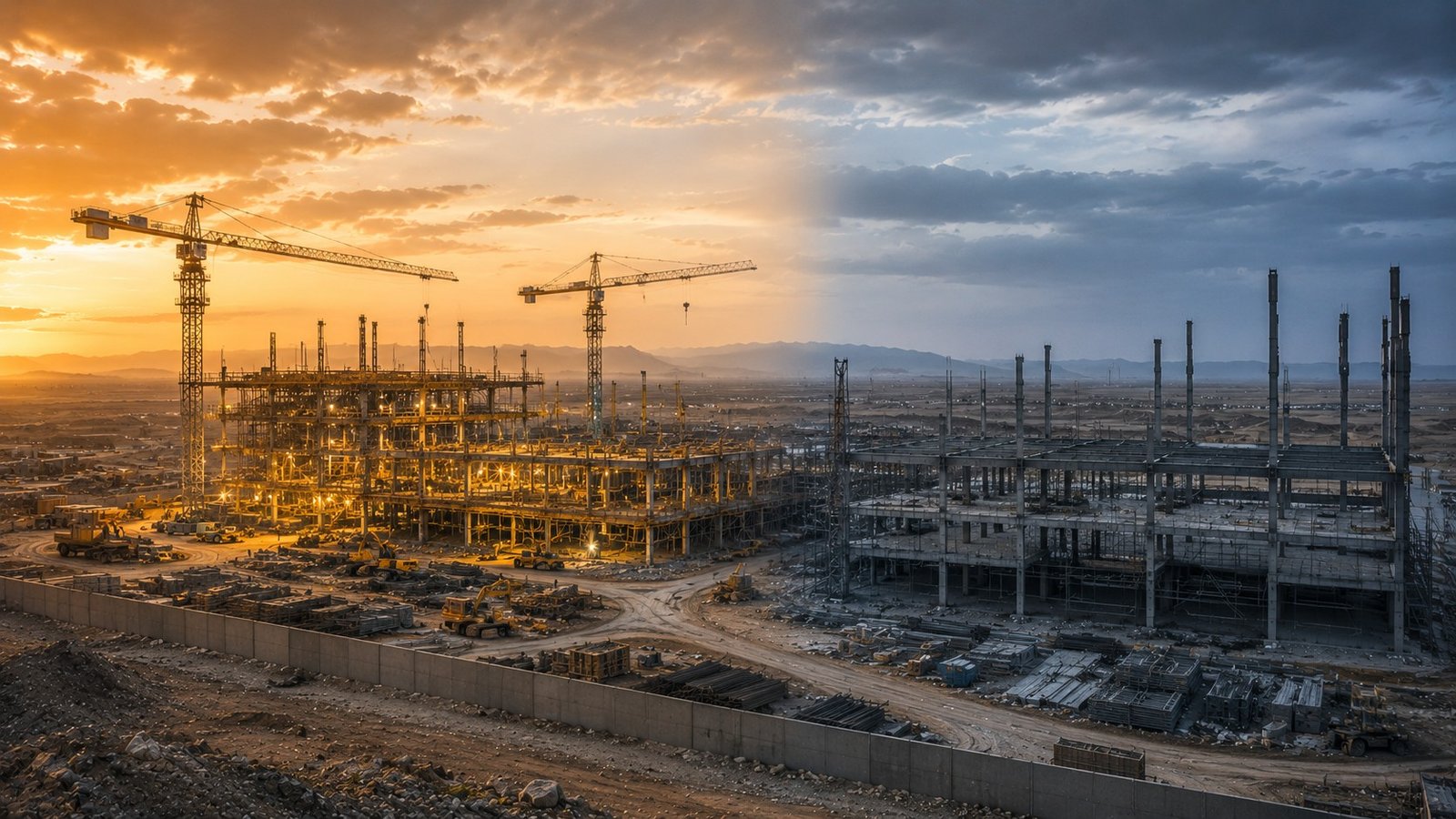
For most of the past decade, NEOM has been treated as a singular, unstoppable commitment, a signature Vision 2030 project too central to Saudi Arabia’s economic narrative to meaningfully scale back. That framing has shifted in 2026. Saudi Arabia’s Public Investment Fund has begun a formal restructuring of NEOM, reclassifying it within its own portfolio, terminating specific construction contracts worth billions of dollars, and reportedly moving to transfer at least one asset to a different PIF subsidiary entirely.

This isn’t a story that’s made many general-audience headlines, but it’s one that matters directly to contractors, suppliers, and investors already engaged with, or considering, work tied to NEOM. Here’s what’s actually confirmed, what’s still being reported rather than officially confirmed, and what it means for anyone doing business in this space.

What’s Actually Happening

Under a revised 2026–2030 strategy, the Public Investment Fund has reclassified NEOM as an independent ecosystem, a standalone pillar separated from the sector-based pillars organizing the rest of PIF’s domestic portfolio, rather than treating it as one project among many under a single umbrella strategy. PIF Governor Yasir Al-Rumayyan described the shift as a move toward greater economic efficiency and long-term financial sustainability, with implementation proceeding in a phased, disciplined, and sequential manner rather than all at once.

Within that restructuring, Oxagon, NEOM’s planned industrial and port hub, has been confirmed as the current priority, with continued investment in its Red Sea port, industrial infrastructure, data centre capacity, and renewable energy assets. Other components of NEOM, most notably The Line and Trojena, have seen contract terminations, project rescoping, or reported delays to their original timelines.

The Numbers Behind the Shift

Why it matters: Restructuring announcements can sound abstract until they’re attached to specific figures, and in this case, the figures are substantial.

In the first quarter of 2026, NEOM terminated several construction contracts with a combined value reported to potentially exceed $5 billion. The largest single termination was a package awarded to Italian contractor WeBuild covering dams, a freshwater lake, and related infrastructure at Trojena, valued at approximately $4.7 billion and reported to be roughly 30 percent complete at the point of termination. Additional contracts tied to both The Line and Trojena were separately cancelled, with affected contractors citing project restructuring as the stated reason.

This connects directly to the infrastructure story we covered in our earlier piece on Trojena losing the 2029 Asian Winter Games, where the incomplete desalination and water transport system supplying Trojena’s lake and snowmaking infrastructure was identified as a core bottleneck. The WeBuild contract termination reported here appears to be a direct continuation of that same underlying issue, rather than a separate, unrelated development.

What’s Being Prioritized vs. What’s Being Scaled Back

Why it matters: Not all of NEOM is being treated equally under this restructuring, and understanding which components are gaining priority versus losing it matters for anyone evaluating where to focus attention.

  • Oxagon is the clear priority. PIF leadership has specifically named it as the current focus of NEOM’s development, tied to its potential as a revenue-generating industrial and logistics hub with more conventional commercial fundamentals than a speculative residential or tourism development.
  • The Line has seen its near-term priority reduced. Public remarks from PIF leadership have distinguished between what’s described as “good to have” versus what’s described as essential for the current phase, with Oxagon named as the latter.
  • Trojena has lost both its marquee international event and a major infrastructure contract. Beyond the Asian Winter Games reassignment to Almaty, the termination of the WeBuild dam and lake package represents a direct reduction in Trojena’s active construction commitments.
  • Sindalah’s management is reportedly being reassessed. According to reporting citing the Financial Times, PIF has considered transferring management of Sindalah, NEOM’s luxury island destination which opened to VIP guests in October 2024 but remains closed to the general public, to Red Sea Global, a separate PIF subsidiary with a stronger track record delivering operational luxury resort properties. This specific transfer has not been confirmed through an official PIF statement as of this writing.

Why This Is Happening Now

Why it matters: This restructuring doesn’t exist in isolation, it reflects a broader shift in how PIF is approaching its full portfolio of Saudi giga-projects.

At the Future Investment Initiative in October 2025, PIF Governor Al-Rumayyan indicated the fund was finalizing a revised investment strategy focused on a smaller set of priority areas through 2030. Saudi Investment Minister Khalid Al-Falih was more direct at the same event, stating that giga-projects had been consuming significant government resources and that PIF needed to scale back spending to create room for private capital, which has so far been hesitant to commit given the financial risks involved.

Trade press coverage has also noted a broader reprioritization toward projects with fixed, externally imposed deadlines, including Expo 2030 Riyadh and the 2034 FIFA World Cup, alongside social infrastructure like housing and healthcare, areas where delivery timelines aren’t as flexible as an open-ended vision project’s can be.

What PIF Says vs. What’s Being Reported

Why it matters: It’s worth distinguishing clearly between PIF’s own public position and the wider trade press interpretation of events, since the two frame this differently.

PIF leadership has stated explicitly, as recently as April 2026, that no NEOM project has been formally cancelled. The official framing is one of rephasing and rescoping, adjusting how and when infrastructure gets delivered, rather than abandoning the underlying commitments. Neom advisory board member Ali Shihabi offered a similar framing in December 2025, describing the approach as adjusting direction before projects become structural liabilities.

At the same time, independent trade press coverage has been more direct in characterizing the scale of what’s changing, terminated contracts worth billions of dollars, a major international sporting event moved to another country, and reported consideration of transferring a flagship asset to a different entity entirely. Both framings can be accurate simultaneously: PIF’s position is that these are course corrections within a continuing project, while the practical, on-the-ground impact for contractors and suppliers involved in the terminated packages is substantial regardless of how it’s categorized.

What This Means for Contractors and Suppliers

Why it matters: Beyond the headlines, this restructuring carries direct, practical implications for anyone currently engaged with, or evaluating, NEOM-related work.

  • Contract termination risk is real, even on PIF-backed projects. The WeBuild termination at roughly 30 percent completion is a clear signal that contractual commitments on even the highest-profile Saudi giga-projects aren’t immune to being unwound mid-delivery.
  • Understand termination and partial-completion payment terms before committing to large-scale packages. Any contractor or major supplier engaging with NEOM-linked work should have clear contractual protection for exactly this scenario.
  • Oxagon represents the more stable near-term opportunity within NEOM specifically. With PIF explicitly prioritizing it as a revenue-generating industrial and port hub, it currently carries less rescoping risk than NEOM’s more speculative residential and tourism-focused components.
  • Diversification across Saudi Arabia’s broader giga-project pipeline reduces concentration risk. Suppliers and contractors with exposure spread across projects like AMAALA, Diriyah Gate, SPARK, and Expo 2030 Riyadh, rather than concentrated in any single NEOM sub-project, are less exposed to the kind of rescoping seen here.
  • Fixed-deadline projects may offer more schedule certainty. Developments tied to externally imposed dates, like Expo 2030 or the 2034 World Cup, are structurally less likely to see the kind of open-ended rescoping affecting parts of NEOM.

Conclusion

NEOM’s 2026 restructuring is a genuine shift, not a rumor or a single isolated contract dispute. Billions of dollars in construction contracts have been terminated, a major international sporting event has been reassigned to another country, and at least one flagship asset’s management is reportedly under review for transfer to a different entity. PIF’s own position is that this reflects disciplined, phased execution rather than abandonment, and Oxagon’s continued prioritization supports that framing. For contractors and suppliers, the practical takeaway is straightforward regardless of how the shift is characterized: understand exactly which part of NEOM you’re engaging with, protect against mid-project rescoping in your contractual terms, and weigh concentration risk against the wider, still-active pipeline of Saudi giga-projects.

Your next steps:

  1. Review any current or prospective NEOM-linked contracts for termination and partial-completion payment protections.
  2. Weigh exposure concentrated in NEOM’s more speculative components against the relative stability of Oxagon and fixed-deadline projects elsewhere in the Kingdom.
  3. Read our related coverage on Trojena’s infrastructure bottleneck for the technical story behind one of the terminated packages referenced here.

Evaluating supply or contracting opportunities across Saudi Arabia’s giga-project pipeline? Contact Kanzotech to discuss your project’s requirements and risk considerations.

Comments

No comments yet. Be the first to comment!

Your comments are valuable

Blog Detail Image

NEOM’s Restructuring: What the Asset Transfers and Contract Terminations Actually Mean

POSTED BY: HYZAM KENZ / 19 August 2026
88 Views
0 Comments

Introduction

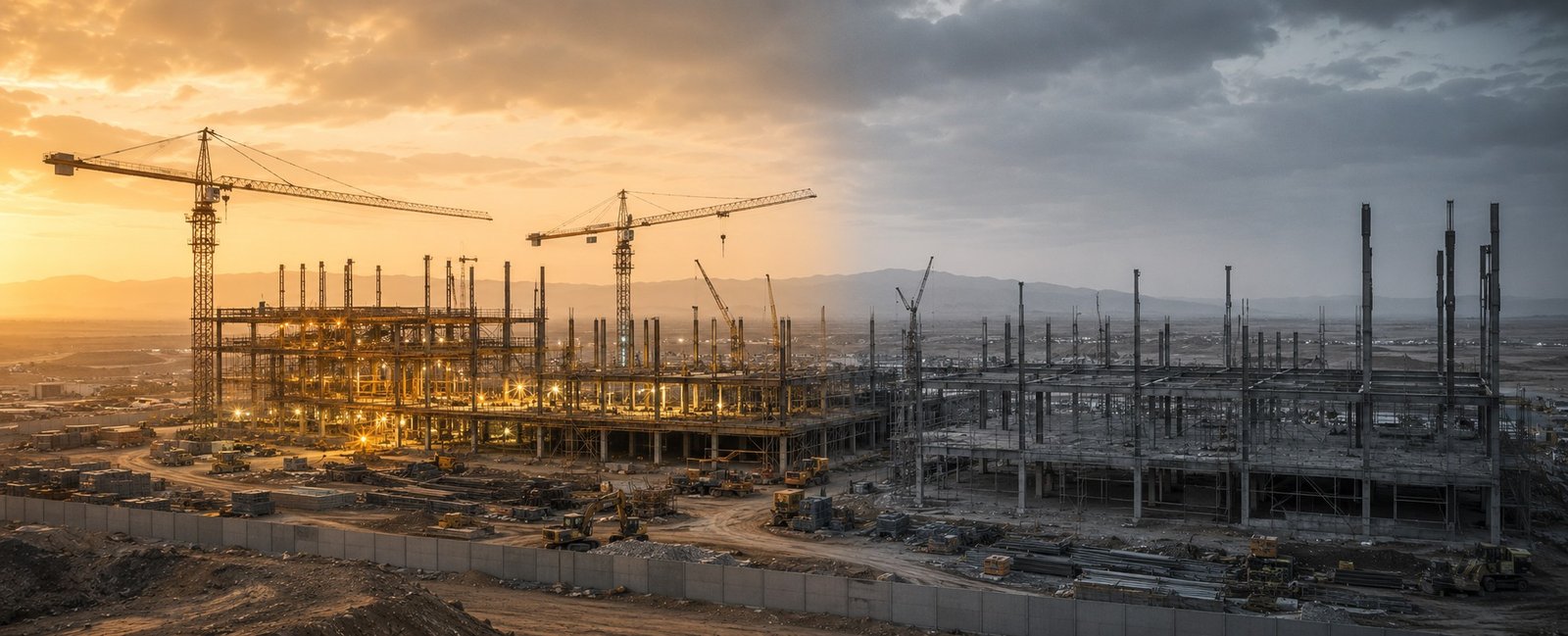
For most of the past decade, NEOM has been treated as a singular, unstoppable commitment, a signature Vision 2030 project too central to Saudi Arabia’s economic narrative to meaningfully scale back. That framing has shifted in 2026. Saudi Arabia’s Public Investment Fund has begun a formal restructuring of NEOM, reclassifying it within its own portfolio, terminating specific construction contracts worth billions of dollars, and reportedly moving to transfer at least one asset to a different PIF subsidiary entirely.

This isn’t a story that’s made many general-audience headlines, but it’s one that matters directly to contractors, suppliers, and investors already engaged with, or considering, work tied to NEOM. Here’s what’s actually confirmed, what’s still being reported rather than officially confirmed, and what it means for anyone doing business in this space.

What’s Actually Happening

Under a revised 2026–2030 strategy, the Public Investment Fund has reclassified NEOM as an independent ecosystem, a standalone pillar separated from the sector-based pillars organizing the rest of PIF’s domestic portfolio, rather than treating it as one project among many under a single umbrella strategy. PIF Governor Yasir Al-Rumayyan described the shift as a move toward greater economic efficiency and long-term financial sustainability, with implementation proceeding in a phased, disciplined, and sequential manner rather than all at once.

Within that restructuring, Oxagon, NEOM’s planned industrial and port hub, has been confirmed as the current priority, with continued investment in its Red Sea port, industrial infrastructure, data centre capacity, and renewable energy assets. Other components of NEOM, most notably The Line and Trojena, have seen contract terminations, project rescoping, or reported delays to their original timelines.

The Numbers Behind the Shift

Why it matters: Restructuring announcements can sound abstract until they’re attached to specific figures, and in this case, the figures are substantial.

In the first quarter of 2026, NEOM terminated several construction contracts with a combined value reported to potentially exceed $5 billion. The largest single termination was a package awarded to Italian contractor WeBuild covering dams, a freshwater lake, and related infrastructure at Trojena, valued at approximately $4.7 billion and reported to be roughly 30 percent complete at the point of termination. Additional contracts tied to both The Line and Trojena were separately cancelled, with affected contractors citing project restructuring as the stated reason.

This connects directly to the infrastructure story we covered in our earlier piece on Trojena losing the 2029 Asian Winter Games, where the incomplete desalination and water transport system supplying Trojena’s lake and snowmaking infrastructure was identified as a core bottleneck. The WeBuild contract termination reported here appears to be a direct continuation of that same underlying issue, rather than a separate, unrelated development.

What’s Being Prioritized vs. What’s Being Scaled Back

Why it matters: Not all of NEOM is being treated equally under this restructuring, and understanding which components are gaining priority versus losing it matters for anyone evaluating where to focus attention.

  • Oxagon is the clear priority. PIF leadership has specifically named it as the current focus of NEOM’s development, tied to its potential as a revenue-generating industrial and logistics hub with more conventional commercial fundamentals than a speculative residential or tourism development.
  • The Line has seen its near-term priority reduced. Public remarks from PIF leadership have distinguished between what’s described as “good to have” versus what’s described as essential for the current phase, with Oxagon named as the latter.
  • Trojena has lost both its marquee international event and a major infrastructure contract. Beyond the Asian Winter Games reassignment to Almaty, the termination of the WeBuild dam and lake package represents a direct reduction in Trojena’s active construction commitments.
  • Sindalah’s management is reportedly being reassessed. According to reporting citing the Financial Times, PIF has considered transferring management of Sindalah, NEOM’s luxury island destination which opened to VIP guests in October 2024 but remains closed to the general public, to Red Sea Global, a separate PIF subsidiary with a stronger track record delivering operational luxury resort properties. This specific transfer has not been confirmed through an official PIF statement as of this writing.

Why This Is Happening Now

Why it matters: This restructuring doesn’t exist in isolation, it reflects a broader shift in how PIF is approaching its full portfolio of Saudi giga-projects.

At the Future Investment Initiative in October 2025, PIF Governor Al-Rumayyan indicated the fund was finalizing a revised investment strategy focused on a smaller set of priority areas through 2030. Saudi Investment Minister Khalid Al-Falih was more direct at the same event, stating that giga-projects had been consuming significant government resources and that PIF needed to scale back spending to create room for private capital, which has so far been hesitant to commit given the financial risks involved.

Trade press coverage has also noted a broader reprioritization toward projects with fixed, externally imposed deadlines, including Expo 2030 Riyadh and the 2034 FIFA World Cup, alongside social infrastructure like housing and healthcare, areas where delivery timelines aren’t as flexible as an open-ended vision project’s can be.

What PIF Says vs. What’s Being Reported

Why it matters: It’s worth distinguishing clearly between PIF’s own public position and the wider trade press interpretation of events, since the two frame this differently.

PIF leadership has stated explicitly, as recently as April 2026, that no NEOM project has been formally cancelled. The official framing is one of rephasing and rescoping, adjusting how and when infrastructure gets delivered, rather than abandoning the underlying commitments. Neom advisory board member Ali Shihabi offered a similar framing in December 2025, describing the approach as adjusting direction before projects become structural liabilities.

At the same time, independent trade press coverage has been more direct in characterizing the scale of what’s changing, terminated contracts worth billions of dollars, a major international sporting event moved to another country, and reported consideration of transferring a flagship asset to a different entity entirely. Both framings can be accurate simultaneously: PIF’s position is that these are course corrections within a continuing project, while the practical, on-the-ground impact for contractors and suppliers involved in the terminated packages is substantial regardless of how it’s categorized.

What This Means for Contractors and Suppliers

Why it matters: Beyond the headlines, this restructuring carries direct, practical implications for anyone currently engaged with, or evaluating, NEOM-related work.

  • Contract termination risk is real, even on PIF-backed projects. The WeBuild termination at roughly 30 percent completion is a clear signal that contractual commitments on even the highest-profile Saudi giga-projects aren’t immune to being unwound mid-delivery.
  • Understand termination and partial-completion payment terms before committing to large-scale packages. Any contractor or major supplier engaging with NEOM-linked work should have clear contractual protection for exactly this scenario.
  • Oxagon represents the more stable near-term opportunity within NEOM specifically. With PIF explicitly prioritizing it as a revenue-generating industrial and port hub, it currently carries less rescoping risk than NEOM’s more speculative residential and tourism-focused components.
  • Diversification across Saudi Arabia’s broader giga-project pipeline reduces concentration risk. Suppliers and contractors with exposure spread across projects like AMAALA, Diriyah Gate, SPARK, and Expo 2030 Riyadh, rather than concentrated in any single NEOM sub-project, are less exposed to the kind of rescoping seen here.
  • Fixed-deadline projects may offer more schedule certainty. Developments tied to externally imposed dates, like Expo 2030 or the 2034 World Cup, are structurally less likely to see the kind of open-ended rescoping affecting parts of NEOM.

Conclusion

NEOM’s 2026 restructuring is a genuine shift, not a rumor or a single isolated contract dispute. Billions of dollars in construction contracts have been terminated, a major international sporting event has been reassigned to another country, and at least one flagship asset’s management is reportedly under review for transfer to a different entity. PIF’s own position is that this reflects disciplined, phased execution rather than abandonment, and Oxagon’s continued prioritization supports that framing. For contractors and suppliers, the practical takeaway is straightforward regardless of how the shift is characterized: understand exactly which part of NEOM you’re engaging with, protect against mid-project rescoping in your contractual terms, and weigh concentration risk against the wider, still-active pipeline of Saudi giga-projects.

Your next steps:

  1. Review any current or prospective NEOM-linked contracts for termination and partial-completion payment protections.
  2. Weigh exposure concentrated in NEOM’s more speculative components against the relative stability of Oxagon and fixed-deadline projects elsewhere in the Kingdom.
  3. Read our related coverage on Trojena’s infrastructure bottleneck for the technical story behind one of the terminated packages referenced here.

Evaluating supply or contracting opportunities across Saudi Arabia’s giga-project pipeline? Contact Kanzotech to discuss your project’s requirements and risk considerations.

Comments

No comments yet. Be the first to comment!

Footer Logo

Let Life Flow With Us!

OFFICE LOCATION

Al Kolibi Tower,
King Saud Street
P.B No: 32426, Dammam,
Saudi Arabia

CONTACT

sales@kanzotech com

info@kanzotech.com

+966 55 981 0470

+966 54 750 9351