Red Sea Project & AMAALA: What the Luxury Tourism Buildout Means for Suppliers

POSTED BY: Hyzam Kanzo / August 4, 2026
Views
35 Views
0 Comments

Introduction

Most coverage of the Red Sea Project and AMAALA focuses on what travelers will eventually see, private resort islands, coral reef diving, wellness retreats framed as the “Riviera of the Middle East.” What gets far less attention is what’s happening underneath all of it: one of the largest, most complex procurement operations in the region’s history, and a structural shift in how Saudi Arabia expects that procurement to work.

For manufacturers, distributors, and suppliers across the Kingdom, that shift matters more than the resort renderings do. This piece looks at what these two giga-projects actually involve, why they’re changing expectations for suppliers well beyond the tourism sector, and what it takes for a business to actually be positioned to serve projects operating at this scale.

What the Red Sea Project and AMAALA Actually Are

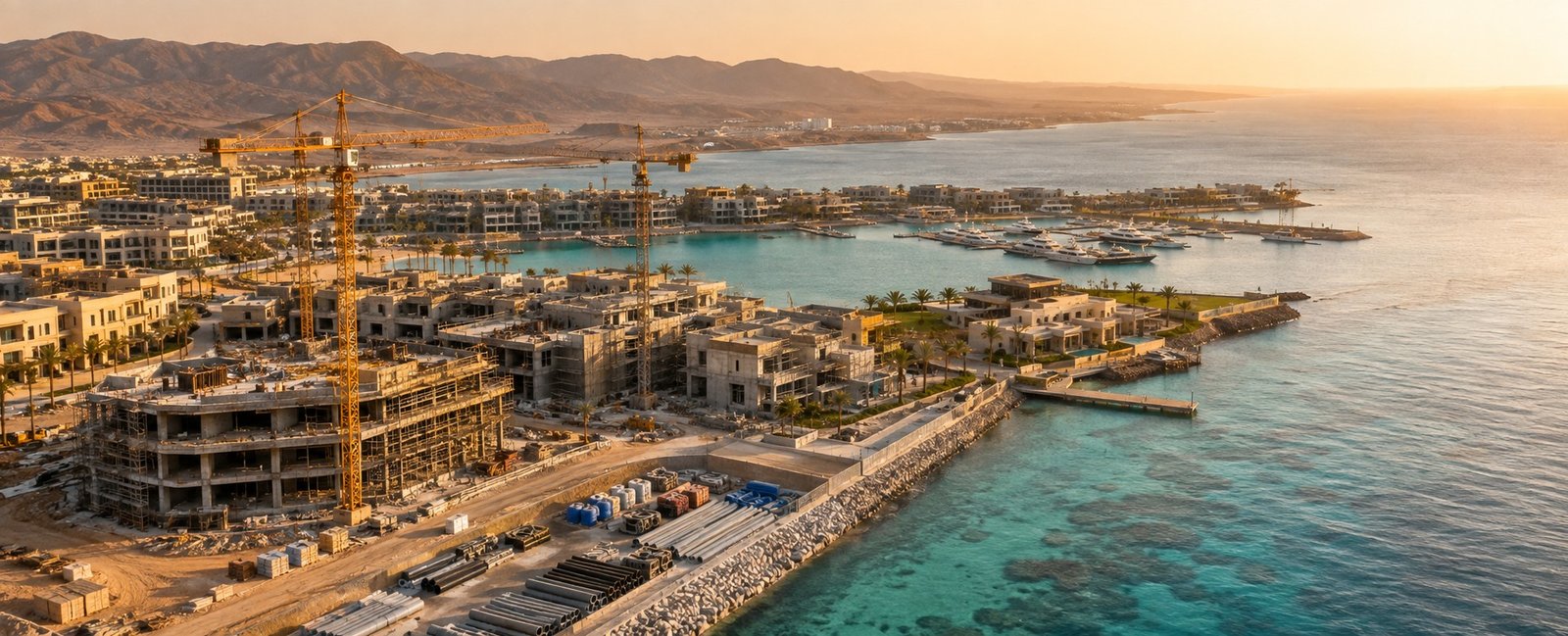
The Red Sea Project and AMAALA are two large-scale luxury tourism destinations along Saudi Arabia’s northwestern coastline, both developed by Red Sea Global (RSG), a Public Investment Fund-owned company formed when the two projects merged their corporate structures in 2022. Together they span over a thousand kilometres of coastline, islands, mountains, and desert landscape, with a combined target of dozens of resort islands and thousands of hotel rooms once fully built out.

AMAALA specifically is positioned as an ultra-luxury wellness, arts, and culture destination, anchored by its Triple Bay masterplan inside the Prince Mohammed bin Salman Royal Reserve in Tabuk. Red Sea Global has already awarded more than 600 construction and development contracts on AMAALA alone, covering everything from the marina village and yacht club to a dedicated marine life institute and hospital, and both destinations have already begun welcoming their first guests, with additional resorts opening in phases as construction continues.

Why it matters: This isn’t a single resort build with a fixed, predictable material list. It’s an ongoing, multi-year pipeline of contracts, each one generating its own downstream demand for plumbing, water systems, MEP components, fittings, and building materials, long after the initial headline contracts are signed.

Why This Matters for Suppliers, Not Just Contractors

Why it matters: Most public attention goes to the tier-one contractors winning headline deals, the construction firms and engineering groups whose names appear in the press releases. But every one of those contracts creates a much longer chain of demand underneath it, for the manufacturers and suppliers providing the actual materials those contractors install.

A yacht club MEP package, a resort’s plumbing and water systems, a marina’s pump infrastructure, none of that gets built without a supply chain of pumps, valves, faucets, fittings, and accessories sitting behind the main contractor. For every construction firm awarded a headline AMAALA or Red Sea Project contract, there’s a much larger, less visible group of suppliers competing to be the ones who actually deliver the materials.

Practical example: Kanzotech’s own client relationships illustrate this indirectly. Saudi Arabian Baytur, a longstanding Kanzotech partner featured among our clients, has been awarded construction contracts on AMAALA’s Triple Bay Marina Village, including structural and MEP work on its yacht club. Projects like this don’t move forward without a reliable materials supply chain behind the main contractor, which is exactly where the opportunity, and the pressure, lands for manufacturers and distributors across the Kingdom.

What These Projects Actually Need From Suppliers

Why it matters: Coastal, resort-scale developments have material requirements that differ meaningfully from a standard commercial or residential build, and suppliers who understand this are better positioned to compete for the work that trickles down from major contracts.

  • Corrosion resistant materials. Coastal, marine-adjacent environments accelerate wear on standard fittings, making brass, stainless steel, and properly rated valve and pump materials far more relevant than budget alternatives.
  • Water and pump infrastructure at scale. Resort islands, marinas, and irrigation for extensive landscaping all require dependable pump systems, not just for potable water but for irrigation, wastewater, and marine facility operations.
  • High-spec plumbing and fittings for luxury hospitality. Hotel and resort-grade construction expects a different quality tier of faucets, valves, and fixtures than standard residential or commercial work, with higher expectations around finish, consistency, and reliability.
  • Reliable bulk supply without import delays. Projects operating on RSG’s timeline can’t afford to wait on materials stuck in international shipping, which puts real pressure on suppliers to either manufacture locally or hold meaningful local stock.

What Makes a Supplier “Giga-Project Ready”

Why it matters: Not every supplier who wants in on this pipeline is actually positioned to deliver at the standard these projects require. A few factors consistently separate suppliers who land repeat work on large developments from those who don’t.

  • In-house manufacturing, not just reselling. Contractors working on tightly scheduled, high-visibility projects need suppliers who control their own quality and production timelines, not ones dependent on a third party factory somewhere else in the supply chain.
  • Certified quality standards. ISO certification and documented quality control aren’t optional at this scale, they’re baseline expectations before a supplier is even considered.
  • A genuinely broad product range. Consolidating plumbing, pumps, valves, and building accessories under fewer, more capable suppliers reduces coordination overhead for contractors managing complex, multi-discipline projects.
  • Local stock and nationwide delivery. A supplier with distribution reach across the Kingdom, not just the capital region, reduces the risk of material gaps holding up a project timeline.
  • A track record with established contractors. Existing relationships with firms already active on major developments carry real weight, since those contractors already understand the supplier’s reliability firsthand.

The Local Content Factor

Why it matters: Vision 2030’s local content push, overseen by the Local Content and Government Procurement Authority, has steadily raised the bar for how much of a project’s value needs to be generated inside the Kingdom, through local manufacturing, local labor, and local supply chains rather than imported goods and services. Giga-projects tied to Vision 2030 objectives, including the Red Sea Project and AMAALA, sit squarely inside this push.

For suppliers, this shifts the competitive advantage away from whoever can source the cheapest imported product, and toward whoever can manufacture, stock, and deliver locally, consistently, and at documented quality standards. A Saudi-based manufacturer with in-house production and nationwide distribution is simply better positioned under this framework than an importer reselling from overseas.

Practical tip: Suppliers evaluating whether to expand local manufacturing capacity, rather than continuing to import and resell, should weigh this shift seriously. It’s not just a compliance requirement on paper, it’s becoming a real factor in which suppliers actually get selected for large-scale project work.

What This Means for Kanzotech’s Position

Kanzotech has spent over 25 years building exactly the kind of manufacturing and distribution footprint these projects reward: in-house production across water pumps, faucets, and building accessories, ISO certified quality control, and a distribution network reaching branches and corporate offices across Saudi Arabia, from Dammam and Riyadh to Jeddah, Makkah, Madinah, and beyond. Our client relationships already span major names active across the Kingdom’s industrial and giga-project landscape, including Saudi Aramco, NEOM, Sadara, Alfanar, and Saudi Arabian Baytur, the same contractor currently delivering key infrastructure on AMAALA’s Triple Bay.

This is also a pattern we’ve seen play out directly on other major developments. Our recent work supplying water pumps for Hyde Park Tower in Riyadh through our partnership with Astra reflects the same dynamic at work on a different large-scale project, a Kanzotech relationship with a major contractor translating directly into material supply on a headline development.

Practical Takeaways for Suppliers Watching This Space

  • Build relationships with tier-one contractors early, rather than waiting for a direct RFQ once a project is already underway.
  • Invest in certification and documentation now, since giga-project procurement teams expect this as a baseline, not a differentiator.
  • Evaluate local manufacturing capacity, given how directly local content policy now factors into large-scale procurement decisions.
  • Focus product development on coastal and hospitality-grade requirements, corrosion resistance, higher finish quality, and consistent bulk reliability, since these are the areas where standard product lines fall short.
  • Track contractor announcements, not just developer announcements. The real supply opportunities usually follow the tier-one contractors, like Baytur’s AMAALA awards, rather than Red Sea Global’s own procurement news.

Conclusion

The Red Sea Project and AMAALA represent more than a tourism story, they’re a preview of how large-scale Saudi development is expected to source materials going forward: locally manufactured, certified, reliably stocked, and delivered by suppliers who can be trusted at scale. For manufacturers and distributors across the Kingdom, the opportunity isn’t necessarily a direct contract with Red Sea Global itself, it’s positioning to be the trusted supply partner behind the contractors who are already winning that work.

Your next steps:

  1. Map which tier-one contractors active on giga-projects are already in your client network, or could be.
  2. Review your certification and documentation readiness against what large-scale procurement now expects.
  3. Assess whether local manufacturing capacity, versus importing and reselling, better positions your business for this shift.
  4. Explore Kanzotech’s water pumps, faucets, and building accessories ranges to see how an in-house manufactured, ISO certified product line fits into large-scale project supply.

Looking to source materials for a large-scale development, or explore a supply partnership for a giga-project? Contact Kanzotech to discuss your project’s requirements.

Comments

No comments yet. Be the first to comment!

Your comments are valuable

Blog Detail Image

Red Sea Project & AMAALA: What the Luxury Tourism Buildout Means for Suppliers

POSTED BY: Hyzam Kanzo / 04 August 2026
35 Views
0 Comments

Introduction

Most coverage of the Red Sea Project and AMAALA focuses on what travelers will eventually see, private resort islands, coral reef diving, wellness retreats framed as the “Riviera of the Middle East.” What gets far less attention is what’s happening underneath all of it: one of the largest, most complex procurement operations in the region’s history, and a structural shift in how Saudi Arabia expects that procurement to work.

For manufacturers, distributors, and suppliers across the Kingdom, that shift matters more than the resort renderings do. This piece looks at what these two giga-projects actually involve, why they’re changing expectations for suppliers well beyond the tourism sector, and what it takes for a business to actually be positioned to serve projects operating at this scale.

What the Red Sea Project and AMAALA Actually Are

The Red Sea Project and AMAALA are two large-scale luxury tourism destinations along Saudi Arabia’s northwestern coastline, both developed by Red Sea Global (RSG), a Public Investment Fund-owned company formed when the two projects merged their corporate structures in 2022. Together they span over a thousand kilometres of coastline, islands, mountains, and desert landscape, with a combined target of dozens of resort islands and thousands of hotel rooms once fully built out.

AMAALA specifically is positioned as an ultra-luxury wellness, arts, and culture destination, anchored by its Triple Bay masterplan inside the Prince Mohammed bin Salman Royal Reserve in Tabuk. Red Sea Global has already awarded more than 600 construction and development contracts on AMAALA alone, covering everything from the marina village and yacht club to a dedicated marine life institute and hospital, and both destinations have already begun welcoming their first guests, with additional resorts opening in phases as construction continues.

Why it matters: This isn’t a single resort build with a fixed, predictable material list. It’s an ongoing, multi-year pipeline of contracts, each one generating its own downstream demand for plumbing, water systems, MEP components, fittings, and building materials, long after the initial headline contracts are signed.

Why This Matters for Suppliers, Not Just Contractors

Why it matters: Most public attention goes to the tier-one contractors winning headline deals, the construction firms and engineering groups whose names appear in the press releases. But every one of those contracts creates a much longer chain of demand underneath it, for the manufacturers and suppliers providing the actual materials those contractors install.

A yacht club MEP package, a resort’s plumbing and water systems, a marina’s pump infrastructure, none of that gets built without a supply chain of pumps, valves, faucets, fittings, and accessories sitting behind the main contractor. For every construction firm awarded a headline AMAALA or Red Sea Project contract, there’s a much larger, less visible group of suppliers competing to be the ones who actually deliver the materials.

Practical example: Kanzotech’s own client relationships illustrate this indirectly. Saudi Arabian Baytur, a longstanding Kanzotech partner featured among our clients, has been awarded construction contracts on AMAALA’s Triple Bay Marina Village, including structural and MEP work on its yacht club. Projects like this don’t move forward without a reliable materials supply chain behind the main contractor, which is exactly where the opportunity, and the pressure, lands for manufacturers and distributors across the Kingdom.

What These Projects Actually Need From Suppliers

Why it matters: Coastal, resort-scale developments have material requirements that differ meaningfully from a standard commercial or residential build, and suppliers who understand this are better positioned to compete for the work that trickles down from major contracts.

  • Corrosion resistant materials. Coastal, marine-adjacent environments accelerate wear on standard fittings, making brass, stainless steel, and properly rated valve and pump materials far more relevant than budget alternatives.
  • Water and pump infrastructure at scale. Resort islands, marinas, and irrigation for extensive landscaping all require dependable pump systems, not just for potable water but for irrigation, wastewater, and marine facility operations.
  • High-spec plumbing and fittings for luxury hospitality. Hotel and resort-grade construction expects a different quality tier of faucets, valves, and fixtures than standard residential or commercial work, with higher expectations around finish, consistency, and reliability.
  • Reliable bulk supply without import delays. Projects operating on RSG’s timeline can’t afford to wait on materials stuck in international shipping, which puts real pressure on suppliers to either manufacture locally or hold meaningful local stock.

What Makes a Supplier “Giga-Project Ready”

Why it matters: Not every supplier who wants in on this pipeline is actually positioned to deliver at the standard these projects require. A few factors consistently separate suppliers who land repeat work on large developments from those who don’t.

  • In-house manufacturing, not just reselling. Contractors working on tightly scheduled, high-visibility projects need suppliers who control their own quality and production timelines, not ones dependent on a third party factory somewhere else in the supply chain.
  • Certified quality standards. ISO certification and documented quality control aren’t optional at this scale, they’re baseline expectations before a supplier is even considered.
  • A genuinely broad product range. Consolidating plumbing, pumps, valves, and building accessories under fewer, more capable suppliers reduces coordination overhead for contractors managing complex, multi-discipline projects.
  • Local stock and nationwide delivery. A supplier with distribution reach across the Kingdom, not just the capital region, reduces the risk of material gaps holding up a project timeline.
  • A track record with established contractors. Existing relationships with firms already active on major developments carry real weight, since those contractors already understand the supplier’s reliability firsthand.

The Local Content Factor

Why it matters: Vision 2030’s local content push, overseen by the Local Content and Government Procurement Authority, has steadily raised the bar for how much of a project’s value needs to be generated inside the Kingdom, through local manufacturing, local labor, and local supply chains rather than imported goods and services. Giga-projects tied to Vision 2030 objectives, including the Red Sea Project and AMAALA, sit squarely inside this push.

For suppliers, this shifts the competitive advantage away from whoever can source the cheapest imported product, and toward whoever can manufacture, stock, and deliver locally, consistently, and at documented quality standards. A Saudi-based manufacturer with in-house production and nationwide distribution is simply better positioned under this framework than an importer reselling from overseas.

Practical tip: Suppliers evaluating whether to expand local manufacturing capacity, rather than continuing to import and resell, should weigh this shift seriously. It’s not just a compliance requirement on paper, it’s becoming a real factor in which suppliers actually get selected for large-scale project work.

What This Means for Kanzotech’s Position

Kanzotech has spent over 25 years building exactly the kind of manufacturing and distribution footprint these projects reward: in-house production across water pumps, faucets, and building accessories, ISO certified quality control, and a distribution network reaching branches and corporate offices across Saudi Arabia, from Dammam and Riyadh to Jeddah, Makkah, Madinah, and beyond. Our client relationships already span major names active across the Kingdom’s industrial and giga-project landscape, including Saudi Aramco, NEOM, Sadara, Alfanar, and Saudi Arabian Baytur, the same contractor currently delivering key infrastructure on AMAALA’s Triple Bay.

This is also a pattern we’ve seen play out directly on other major developments. Our recent work supplying water pumps for Hyde Park Tower in Riyadh through our partnership with Astra reflects the same dynamic at work on a different large-scale project, a Kanzotech relationship with a major contractor translating directly into material supply on a headline development.

Practical Takeaways for Suppliers Watching This Space

  • Build relationships with tier-one contractors early, rather than waiting for a direct RFQ once a project is already underway.
  • Invest in certification and documentation now, since giga-project procurement teams expect this as a baseline, not a differentiator.
  • Evaluate local manufacturing capacity, given how directly local content policy now factors into large-scale procurement decisions.
  • Focus product development on coastal and hospitality-grade requirements, corrosion resistance, higher finish quality, and consistent bulk reliability, since these are the areas where standard product lines fall short.
  • Track contractor announcements, not just developer announcements. The real supply opportunities usually follow the tier-one contractors, like Baytur’s AMAALA awards, rather than Red Sea Global’s own procurement news.

Conclusion

The Red Sea Project and AMAALA represent more than a tourism story, they’re a preview of how large-scale Saudi development is expected to source materials going forward: locally manufactured, certified, reliably stocked, and delivered by suppliers who can be trusted at scale. For manufacturers and distributors across the Kingdom, the opportunity isn’t necessarily a direct contract with Red Sea Global itself, it’s positioning to be the trusted supply partner behind the contractors who are already winning that work.

Your next steps:

  1. Map which tier-one contractors active on giga-projects are already in your client network, or could be.
  2. Review your certification and documentation readiness against what large-scale procurement now expects.
  3. Assess whether local manufacturing capacity, versus importing and reselling, better positions your business for this shift.
  4. Explore Kanzotech’s water pumps, faucets, and building accessories ranges to see how an in-house manufactured, ISO certified product line fits into large-scale project supply.

Looking to source materials for a large-scale development, or explore a supply partnership for a giga-project? Contact Kanzotech to discuss your project’s requirements.

Comments

No comments yet. Be the first to comment!

Footer Logo

Let Life Flow With Us!

OFFICE LOCATION

Al Kolibi Tower,
King Saud Street
P.B No: 32426, Dammam,
Saudi Arabia

CONTACT

sales@kanzotech com

info@kanzotech.com

+966 55 981 0470

+966 54 750 9351