

Building for Altitude: What Soudah Peaks Means for Saudi Arabia’s Construction Material Standards


Introduction
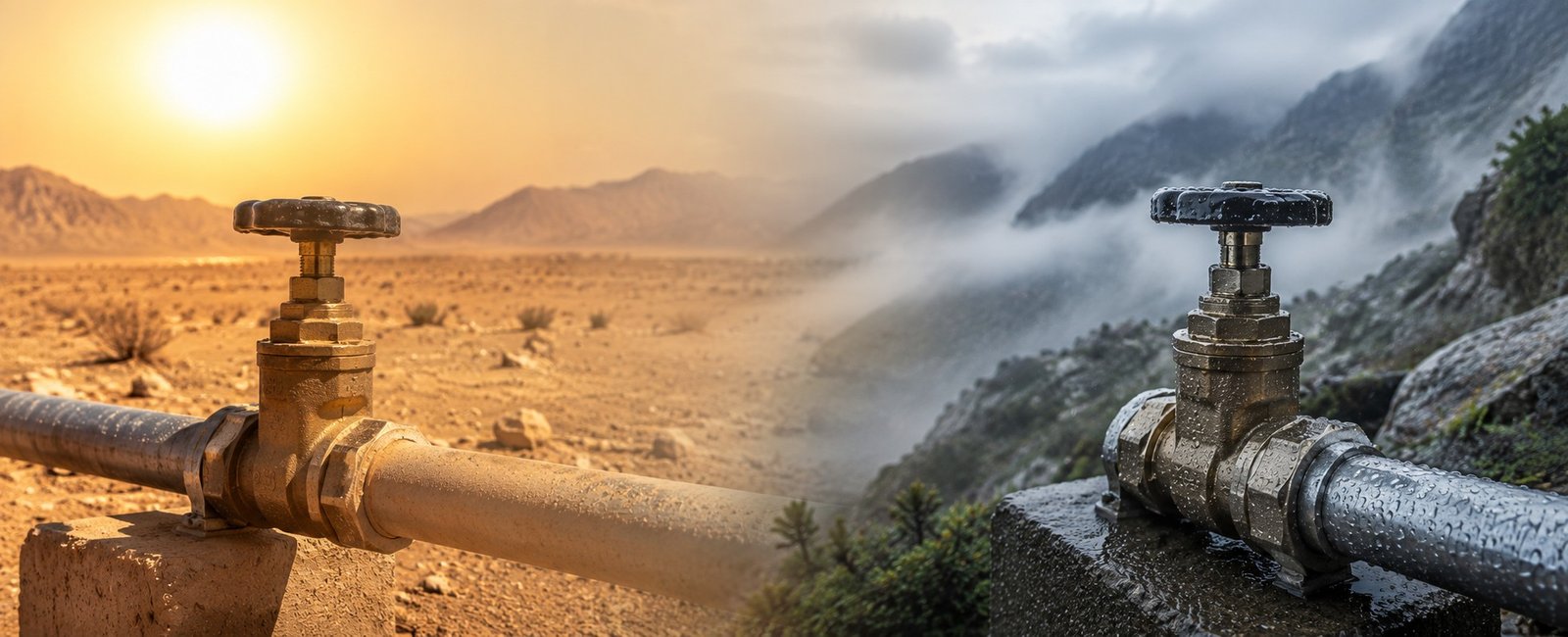
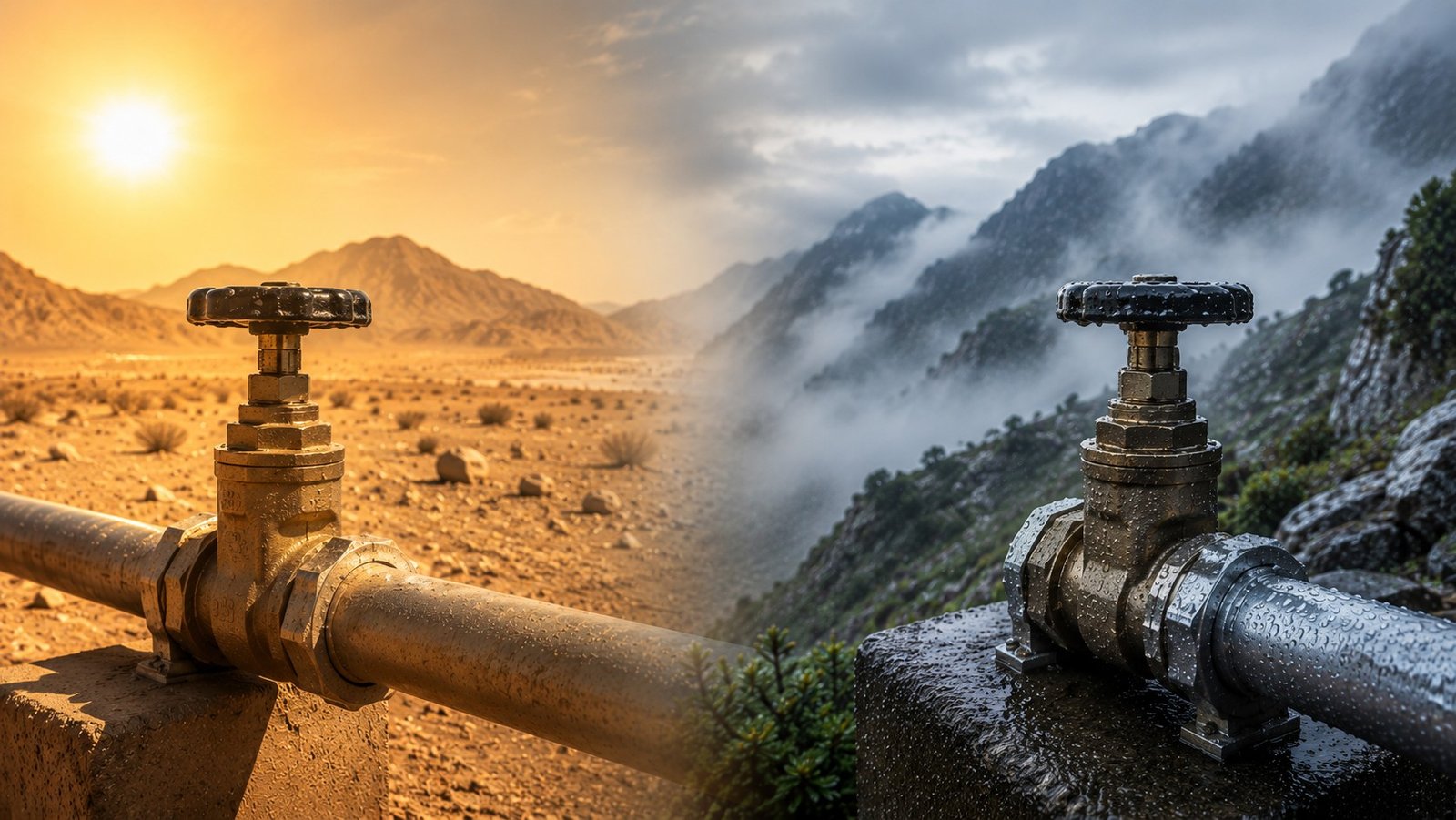
Almost every material standard, product spec, and supplier claim in Saudi Arabia’s construction industry is built around the same underlying assumption: heat. Corrosion resistance is measured against desert dust and intense UV exposure. Plastic components are rated for high ambient temperatures. Water systems are engineered for a climate where freezing is, for nearly the entire country, simply not a design consideration.
Soudah Peaks breaks that assumption. At 3,015 metres above sea level in the Aseer region’s Sarawat mountains, it sits in a climate that has more in common with a temperate highland than with the rest of the Kingdom’s construction landscape. That difference isn’t just a curiosity, it has real implications for how materials, seals, coatings, and water infrastructure need to be specified for a project like this, and for what “built for Saudi conditions” should actually mean as more of the Kingdom’s highland regions enter major development.
The Climate Soudah Peaks Actually Sits In
Why it matters: Understanding the real climate data behind Soudah Peaks’ elevation is the starting point for understanding why standard Saudi construction assumptions don’t fully apply here.
Temperature drops by roughly 6.5°C for every 1,000 metres of elevation gained. Abha, the Aseer region’s capital at around 2,270 metres, sits noticeably cooler than the rest of the Kingdom, with summer daytime temperatures typically in the 24°C to 29°C range, compared to 40°C or higher on the plains below. Soudah Peaks, at 3,015 metres, sits meaningfully higher again than Abha itself, on the Kingdom’s highest peak.
The region also experiences something close to a genuine wet season. Aseer receives an average of roughly 250 to 500 millimetres of rainfall annually, driven by a summer monsoon pattern between June and September, giving it the highest rainfall rate of any region in the Kingdom. That same weather pattern brings heavy, sustained fog across the highlands, particularly through the summer months, along with reduced visibility that can persist for days at a time. At the highest peaks, winter brings genuinely cold conditions, a sharp contrast to the “hot days, cold nights” desert pattern that defines most of Saudi Arabia’s climate.
Why Standard Saudi Material Specs Assume a Different Climate
Why it matters: Most building material standards used across Saudi Arabia’s construction sector, plumbing fittings, seals, coatings, and water systems, are optimized for a semi-arid to arid desert climate: high heat, intense UV exposure, low humidity, and airborne dust and sand. That’s a reasonable baseline for the vast majority of the Kingdom, but it’s a poor match for a project sitting in a cool, monsoon-affected highland climate.
- Heat resistance dominates standard specs, while cold tolerance is rarely a consideration, because it rarely needs to be, everywhere except the highest elevations in the Sarawat and Hejaz mountains.
- Corrosion resistance is typically tested against dust and UV exposure, not sustained fog, condensation, and monsoon-driven humidity, a genuinely different moisture profile.
- Water system engineering across the Kingdom is largely built around flat or gently sloped terrain, not the dramatic elevation changes and uphill water movement a mountain site like Soudah Peaks requires.
Freeze-Thaw and Cold Considerations for Exposed Plumbing and Fittings
Why it matters: While Soudah Peaks isn’t approaching the sustained sub-zero conditions of a true alpine climate, the genuinely cold winter conditions at its highest elevations mean freeze-thaw resistance becomes a real design consideration in a way it simply isn’t for the rest of the Kingdom’s giga-project pipeline.
- Exposed outdoor fittings, hose bibs, exterior valves, and irrigation components, need materials and seals rated for occasional near-freezing exposure, not just heat.
- Rubber and silicone seals behave differently in cold conditions, becoming less flexible at lower temperatures, which affects long-term sealing performance in ways that don’t show up in a standard hot-climate durability test.
- Water storage infrastructure at elevation needs design consideration for temperature swings between day and night that are considerably wider than at lower elevations, given how much faster mountain air temperatures fluctuate compared to the more thermally stable desert lowlands.
Humidity, Fog, and Corrosion: A Different Kind of Moisture Exposure
Why it matters: Saudi Arabia’s coastal regions already deal with high humidity, but it’s a different mechanism entirely from what Soudah Peaks experiences. Coastal humidity is hot and salt-laden, tied to proximity to the Red Sea or Arabian Gulf. Aseer’s highland humidity is driven by monsoon rainfall and orographic fog, cooler, sustained, and without the salt exposure that shapes coastal corrosion standards.
This distinction matters for material selection. A fitting or coating rated for coastal salt-air resistance isn’t automatically the right choice for sustained cool, moist, fog-heavy exposure. Both call for corrosion resistant materials, brass and stainless steel remain strong choices in either case, but the specific coating and sealing considerations differ meaningfully between a hot, salty coastal environment and a cool, foggy highland one.
Elevation and Water System Engineering
Why it matters: This is where altitude has the most direct, practical impact on infrastructure design, and it’s also where the connection to pump and water system engineering becomes unavoidable.
- Water has to move uphill. Unlike a coastal or flat urban site, delivering water across a development spread over a mountain requires pumps engineered specifically for the pressure and head requirements of significant elevation change, not standard flat-terrain assumptions.
- Atmospheric pressure drops with elevation, which affects pump performance characteristics, including priming behavior and cavitation risk, considerations that simply don’t factor into water system design almost anywhere else in the Kingdom.
- Distributed storage becomes necessary rather than optional. As reflected in Soudah Peaks’ own disclosed infrastructure plans, water storage and pump stations are spread across multiple points on the site, rather than centralized, precisely because gravity and elevation make a single distribution point impractical across a mountainous, multi-zone development.
- Sewage lifting becomes a much larger part of the system. Moving wastewater across dramatic elevation changes between zones requires considerably more lifting infrastructure than a comparable flat-terrain project of similar scale.
What This Means for Material and Product Standards Broadly
Why it matters: Soudah Peaks is likely the first of what could become a genuine category shift in Saudi construction, projects that can’t simply default to heat-and-dust-optimized material specs.
For manufacturers and specifiers, this points toward a few practical shifts:
- Product ranges built for a single “Saudi climate” assumption need reconsidering as more highland and varied-climate developments move forward. A single heat-rated spec sheet doesn’t cover a project like this.
- Pump systems need to be specified for elevation and pressure conditions, not just flow rate and standard operating temperature, when a project involves meaningful elevation change.
- Seals, washers, and coatings need testing against cooler, moisture-heavy conditions, not only heat and UV exposure, for any project in the Kingdom’s highland regions.
- Documentation and certification should reflect climate-specific performance, not a generic “suitable for Saudi Arabia” claim that implicitly assumes desert conditions.
Practical Takeaways for Suppliers and Specifiers
- Don’t assume standard heat-rated specs automatically apply. A product built and tested for Riyadh or Jeddah’s climate isn’t automatically validated for Aseer’s highland conditions.
- Factor elevation into pump and water system selection early, since pressure and head requirements change meaningfully with significant elevation gain across a site.
- Consider cold-tolerance testing for exposed components, even if full freeze protection isn’t required, given the genuinely cooler winter conditions at Soudah Peaks’ highest points.
- Treat fog and monsoon humidity as a distinct corrosion category, separate from both desert dust exposure and coastal salt-air exposure.
- Watch for this pattern extending beyond Soudah Peaks. As Saudi Arabia’s giga-project pipeline diversifies geographically, highland and varied-climate sites are likely to become a more common design consideration, not a one-off exception.
Conclusion
Soudah Peaks isn’t just Saudi Arabia’s first mountain giga-project, it’s a genuine test of whether the Kingdom’s construction material standards can adapt beyond a single desert-climate assumption. Elevation-driven temperature swings, monsoon humidity and fog, and the mechanical realities of moving water uphill across a mountainous site all point toward the same conclusion: a project like this needs materials, seals, and water systems specified for its actual conditions, not a generic national standard built around heat and aridity.
Your next steps:
- Review pump and water system specifications against elevation and pressure requirements, not just flow rate.
- Reassess seal and coating choices for cooler, moisture-heavy conditions rather than heat and dust alone.
- Explore Kanzotech’s water pumps and building accessories ranges, and see our broader look at what Soudah Peaks means for suppliers for the project’s wider supply chain context.
Working on a project with genuinely different climate conditions than standard Saudi specs assume? Contact Kanzotech to discuss material and water system requirements for your site.










Comments
No comments yet. Be the first to comment!